A gesture to adjust, not a fragrance to abandon
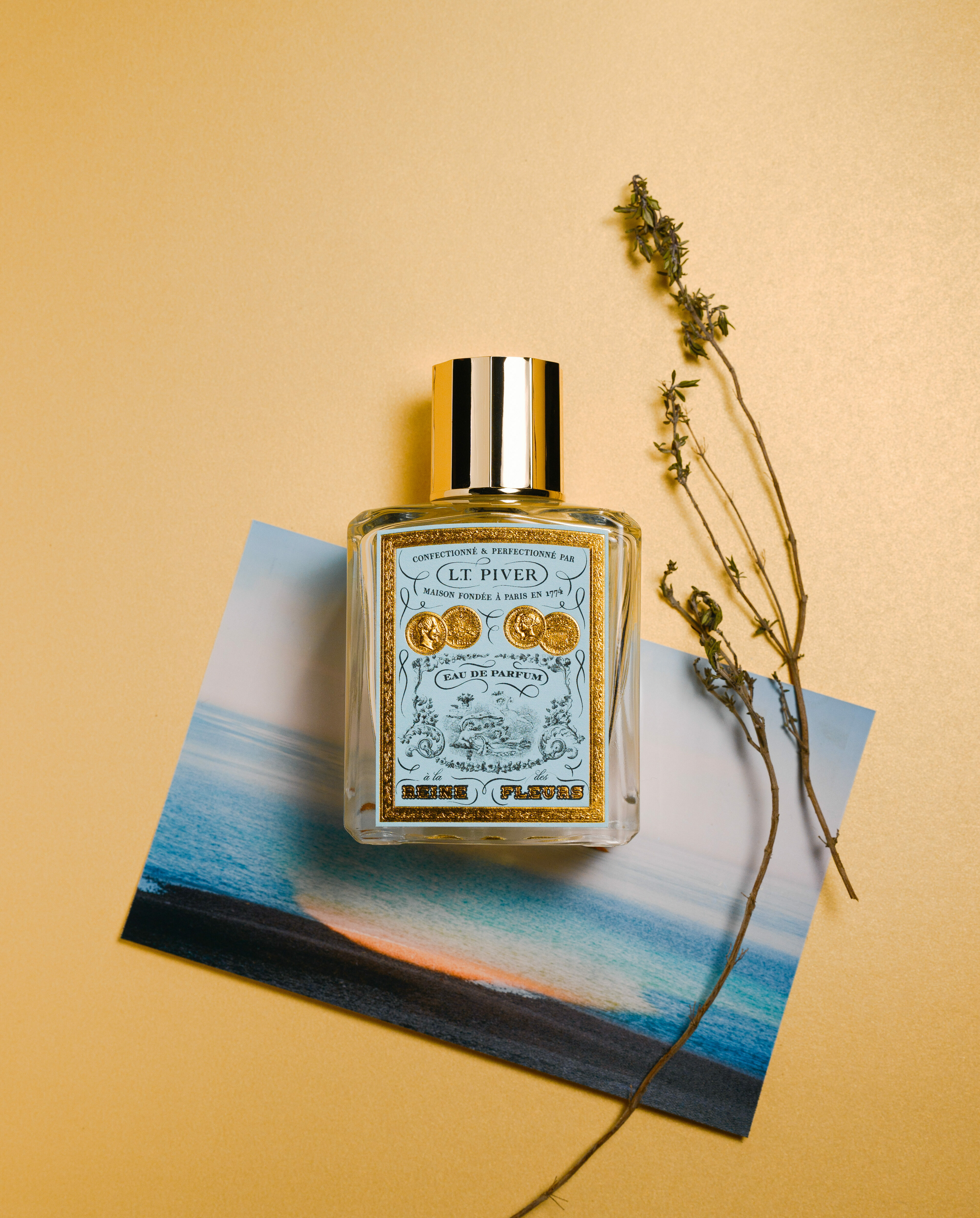
Some of our citrus essences, such as the verbena and petitgrain in our Eau de Parfum À la Reine des Fleurs, belong to a family of raw materials known to react with UV rays on sun-exposed skin. This phenomenon has a precise name: berloque dermatitis, described by dermatologists as early as the beginning of the 20th century, when the bergamot in the first Eaux de Cologne, applied to the neck and décolletage, would leave pendant-shaped marks on the skin.
The mechanism is now well understood: citrus fruits and certain related plants, such as verbena, contain furocoumarins, molecules that react to UV rays by binding to the skin. The reaction is not immediate: it appears 24 to 48 hours after exposure, in the form of redness or slight localised pigmentation, which explains why this phenomenon remains little known to the general public.
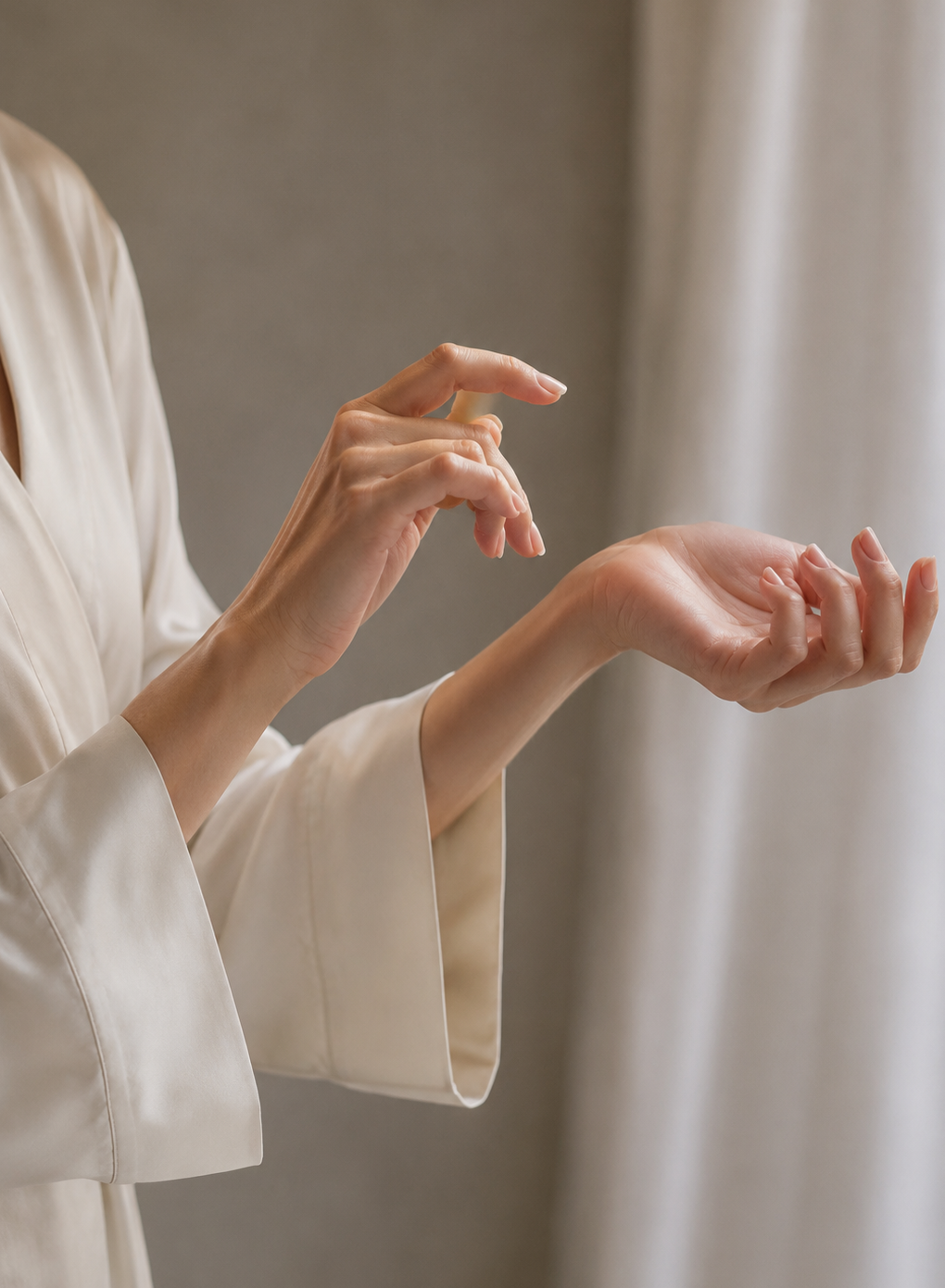
Nothing to worry about, though: simply wait a few hours before sun exposure, or better still, adopt the fabric technique directly. This is not a reason to set aside your citrus fragrances in summer, simply an opportunity to adjust your gesture.
The heat also calls for a slight adjustment in dosage. It accelerates the diffusion of perfume and amplifies its trail: a quantity barely perceptible in winter becomes far more present on skin warmed by the sun. Two or three sprays are often enough, applied to a single point, sprayed from a slightly greater distance for a lighter veil, a gesture that also limits the concentration of photoactive materials before prolonged sun exposure.