
The perfumer’s little dictionnary, L.T. Piver edition
There are already plenty of perfume glossaries out there, often very thorough, sometimes a little impersonal. Rather than adding one more to the pile, we wanted to do things differently: explain this vocabulary through our own creations. A way to understand these words not in the abstract, but in the bottle.
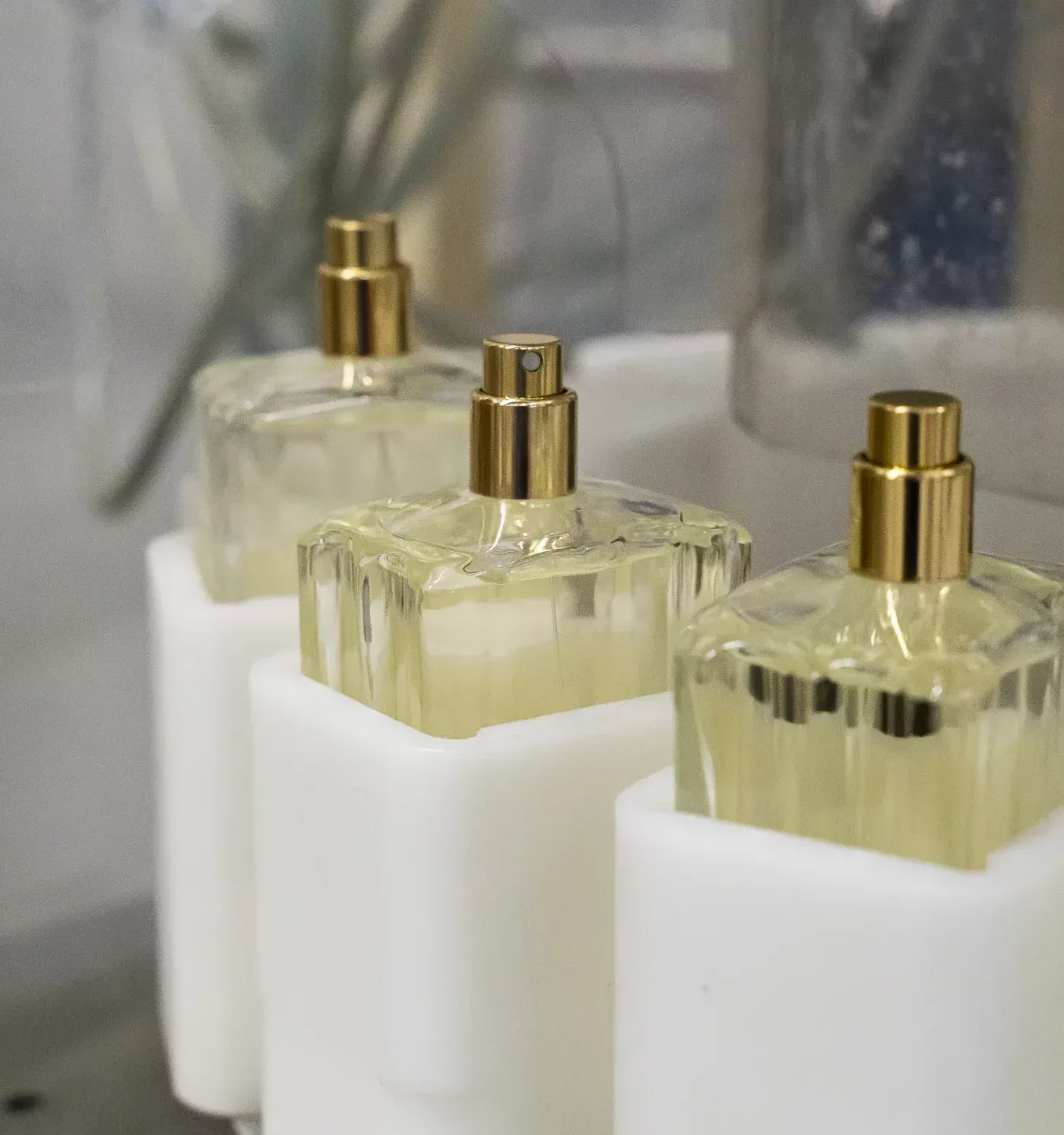
The nose. This is the nickname given to the perfumer-creator. Pompeia is a fine example of collaboration: inspired by the archaeological excavations of Pompeii, this fragrance was born from the meeting between Jacques Rouché, then artistic director of the house, and the chemist Georges Darzens.
The chemist-perfumer. At the crossroads of science and creation, this profile pairs a background in chemistry with a perfumer’s sensitivity. It is this dual perspective that allowed Georges Darzens to contribute to L.T. Piver’s creations.
The perfume organ. The perfumer’s workbench, shaped like a half-circle, designed so that every raw material is within reach, without ever having to move.
The still. The apparatus traditionally used to distill plants and flowers.
The formula. The precise list of ingredients that make up a fragrance, along with their exact dosage. The formula for À la Reine des Fleurs, created in 1774, was preserved and then revisited exactly a century later, in 1874, for the house’s centenary.
Eau de Cologne. A light alcoholic preparation, between 2 and 5% concentrate. This is the house’s historic concentration, the one used in its very first creation in 1774, and still found today across our collection of Colognes, crafted according to our drawer-maturation process.
Eau de Parfum. A richer concentration, between 10 and 20%, for a more assertive presence and longer-lasting wear. This is the version in which the full olfactory pyramid of each of our seven creations, from À la Reine des Fleurs to Pompeia, fully unfolds.
Raw materials and how they're extracted
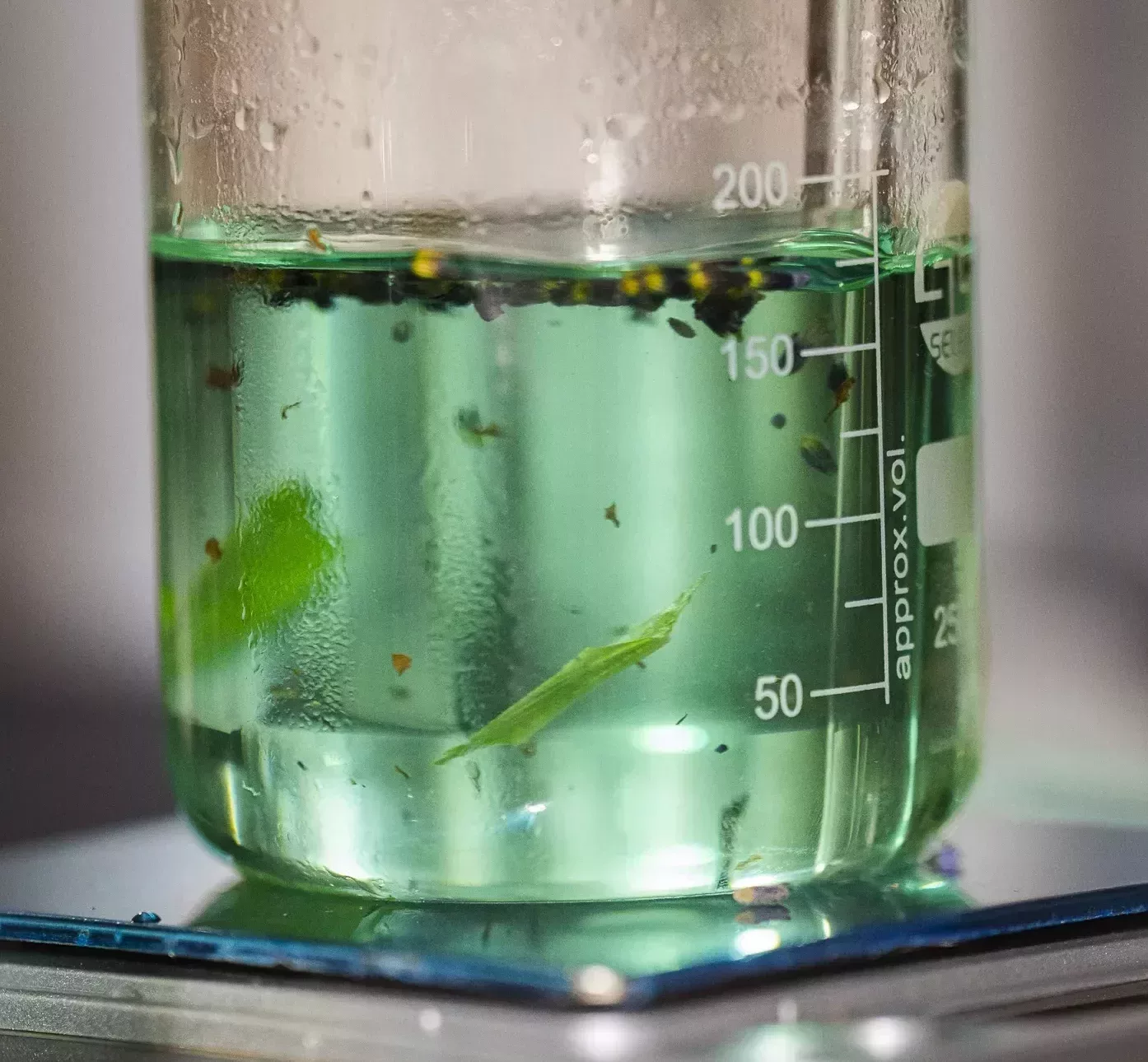
The absolute. The most concentrated form a raw material can reach: a few drops are enough to carry the entire character of a flower or a whole plant.
Enfleurage. An ancient extraction technique that involves laying fresh flower petals onto a fatty substrate capable of gradually absorbing their scent. It was long used for flowers too delicate to withstand the heat of distillation, such as jasmine.
Cold expression. A technique without heating, which involves cold-pressing the peel or zest of a fruit. This is what yields the bergamote freshness that opens Eau des Princes, backed by a touch of mint, for a sharp, lively start.
Maceration, or maturation. The time a fragrance is given to find itself: a concentrate left to rest, sometimes for months, until its different materials stop clashing and settle into balance. This is exactly the principle behind drawer-maturation, an ancestral craft the house still applies today across its entire collection.
The aldehyde. A family of synthetic molecules that brings a metallic, warm, slightly vibrant note, often used to add volume and trail to a composition. It appears right in the top notes of Rêve d’Or, paired with pink pepper and orange, for a sparkling opening worthy of its name.
The soliflore. A fragrance built almost entirely around a single flower, showcased without embellishment.
The full fragrance range
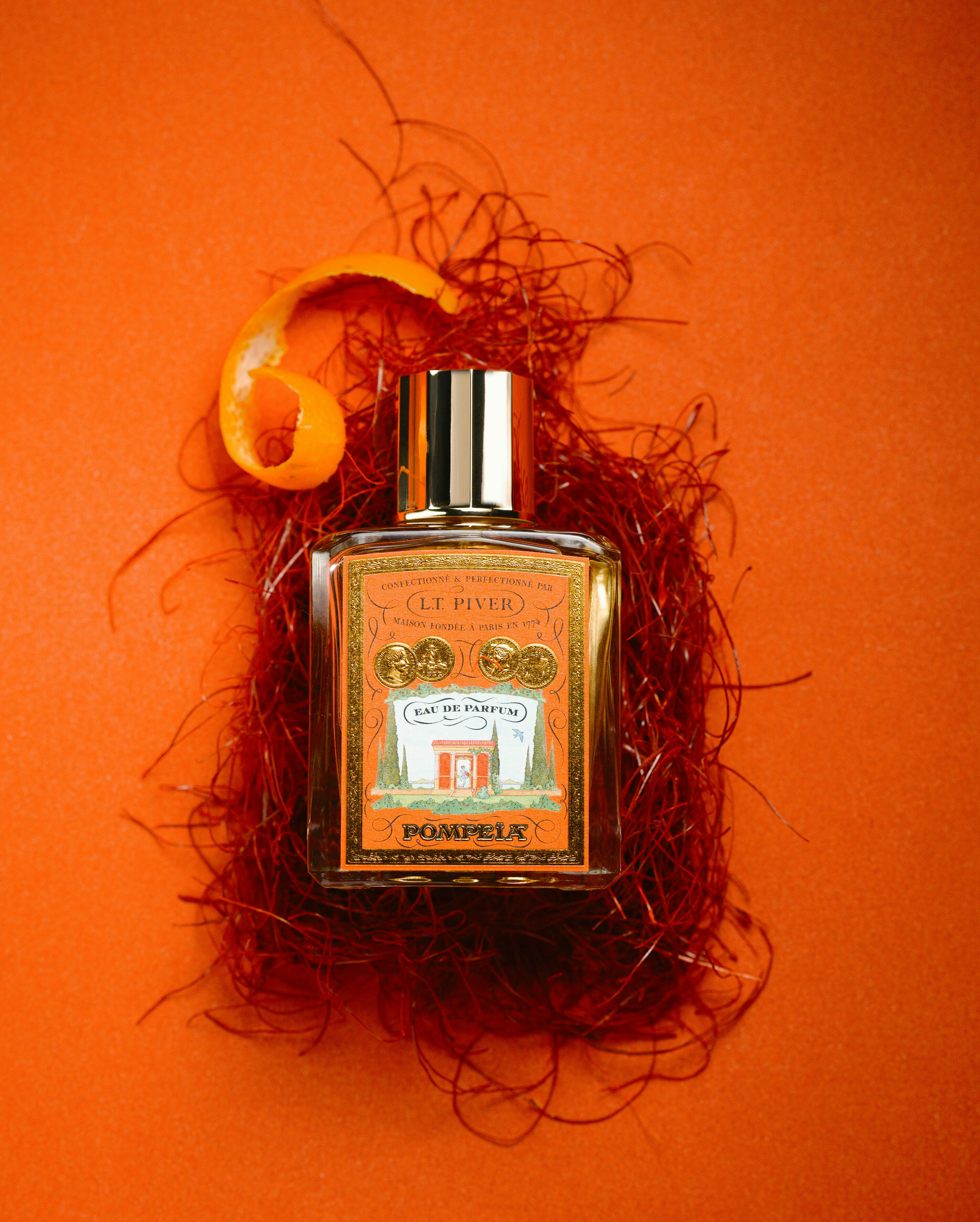
The olfactory family. The group of fragrances built in a similar way, sharing the same dominant notes. Seven are traditionally distinguished: floral, woody, chypre, citrus, oriental, and leather. Our collection explores most of them.
Citrus (hesperidic). A family defined by the freshness of citrus fruit and herbs. À la Reine des Fleurs is the house’s oldest expression of it, with verbena and orange blossom in its top notes, inherited from the very first creation of 1774.
Floral. The family that groups fragrances built around a flower as their main theme. Héliotrope Blanc, built around heliotrope, and Pompeia, carried by jasmine in its heart, are two very different interpretations: one powdery and enveloping, the other fruity and luminous.
Woody. A family dominated by cedar, sandalwood, or vetiver, found in the base notes of Un Parfum d’Aventure, anchoring the warm spices of its heart notes, clove, nutmeg, and cinnamon.
Oriental, or amber. A family of smooth, spicy, sometimes animalic notes. Rêve d’Or, already mentioned above for its aldehydes, unfolds fully here in its base, between musk, cedar, and amber, for a trail as opulent as its name promises.
Chypre. A family built around a contrast between a citrus top note and a woody, often patchouli-rich base. Pompeia offers an interesting echo of this, with the freshness of its mandarin top note answering the depth of patchouli and amber in its base.
Leather. A family of powerful, often masculine fragrances, with notes directly evoking worked leather. Cuir de Russie is our most direct interpretation, with its signature base notes: leather, sandalwood, and incense.
From application to memory
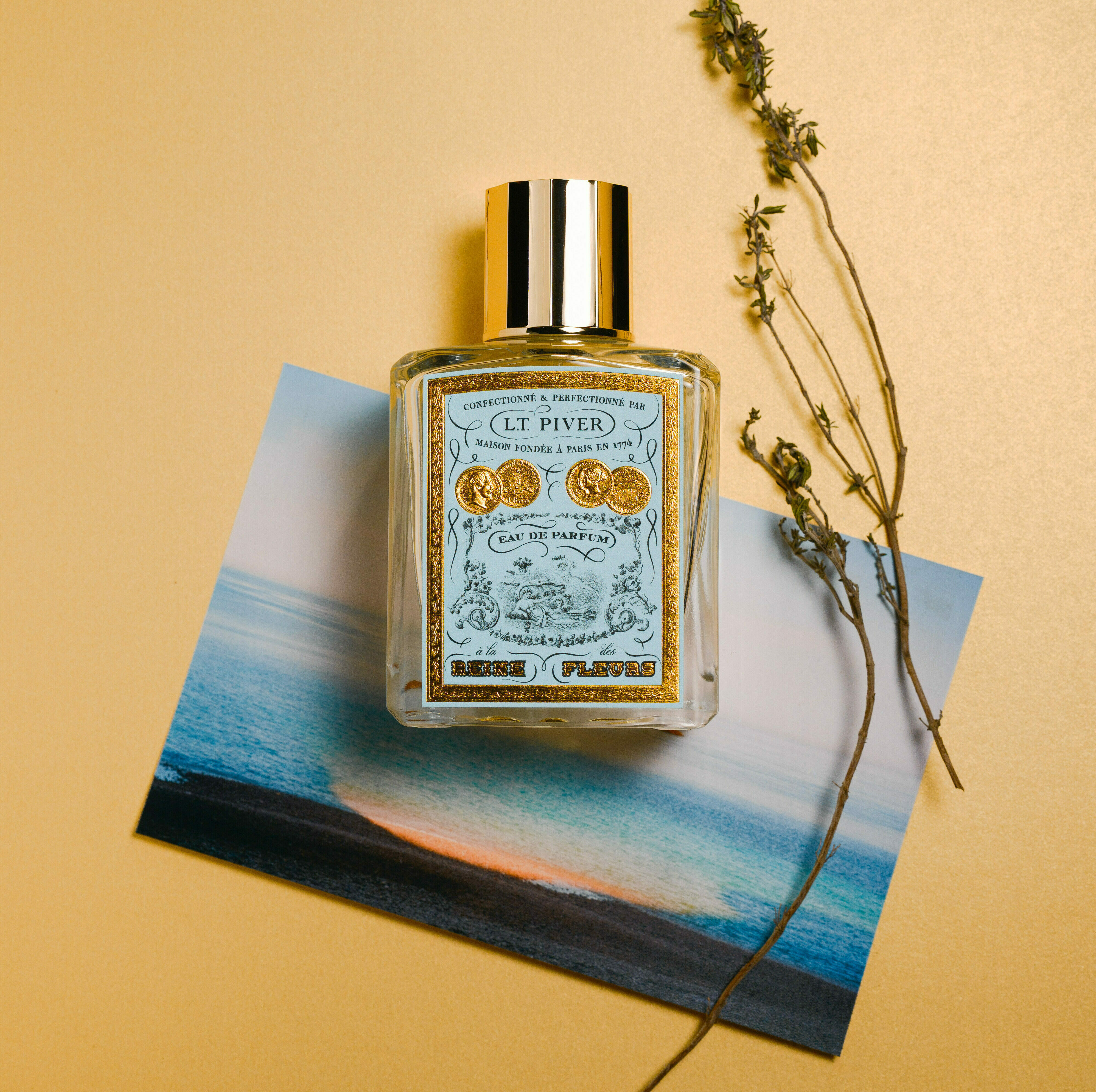
The top notes. The first olfactory impression perceived upon application, the most fleeting. In À la Reine des Fleurs, it’s verbena and orange blossom that open the show.
The heart notes. Those that emerge once the top notes have faded. In Un Parfum d’Aventure, this is the moment when clove, nutmeg, and cinnamon take over from bergamot and pink pepper.
The base notes. The most tenacious, lasting the longest. In Cuir de Russie, this is where the fragrance’s signature lives: leather, sandalwood, and incense, capable of lingering for hours after application.
The fixative. A raw material, often woody or musky, whose role is to slow the evaporation of the other components. Ambrox plays this role in Eau des Princes, just as tonka bean does in Héliotrope Blanc, or sandalwood in Cuir de Russie.
The trail (sillage). What lingers in a room, or in the air of a street, long after the person wearing the fragrance has gone. Rêve d’Or, designed to shine intensely and embody the fulfillment of dreams, is undoubtedly the most generous example in our collection.
Olfactory memory. That strange faculty by which a scent, more than any image, can bring back a precise memory in a fraction of a second. It’s what explains why so many of our customers rediscover, decades later, a fragrance once encountered in a grandmother’s dressing table, and find their way back to the house through it.
The knockoff (contretype). A fragrance designed to evoke another, already well-known one, without ever claiming it as its own. A problem the house has known for a long time: as early as the 19th century, Louis-Toussaint Piver was already putting authentication systems in place to protect his creations from this kind of imitation.
Want to put this vocabulary into practice? Discover the olfactory pyramid of each of our seven fragrances, from À la Reine des Fleurs to Pompeia.
Personalized Gift
Gift wrapping available with every order.

Customer Service
Our team is here to assist you: contact us by email.
Free Delivery
With any purchase $over 150

Complimentary Sample
Complimentary fragrance sample with purchases of 65€ or more.