
Seven fragrances, seven ways of looking at art
There are works of art that seem to almost give off a scent, their atmosphere is so precise: the light of a garden, the grain of a fabric, the richness of an interior. We wanted to play this game ourselves: pairing each of our seven fragrances, one by one, with a work of art that shares its spirit, note by note.
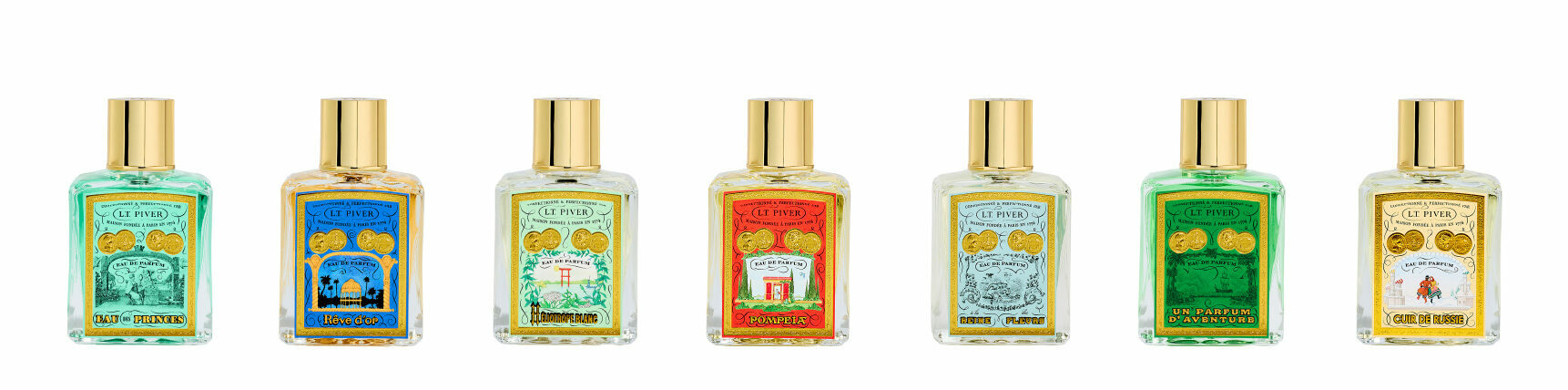
Before reading on, try the exercise yourself.
Take these seven names, one at a time, and let them resonate without trying to analyze them: Pompeia, Rêve d’Or, À la Reine des Fleurs, Héliotrope Blanc, Eau des Princes, Cuir de Russie, Un Parfum d’Aventure. For each one, close your eyes for a moment. What color comes to mind? What season, what time of day? A garden bathed in early morning light, a stern-faced portrait in the shadows of a study, a jungle so dense it seems to breathe, a sky catching fire just before a storm? There’s no right answer to find, only your own: that’s exactly the point of a name, it opens a different door depending on who walks through it.
Take the time to imagine your own painting for each of these seven fragrances, however fleeting or precise it may be, before discovering, just below, the works we’ve paired with them ourselves. A game of imagination, not an art history lesson, with the exception of two creations whose artistic inspiration is genuinely real.
Lost cities, golden dreams
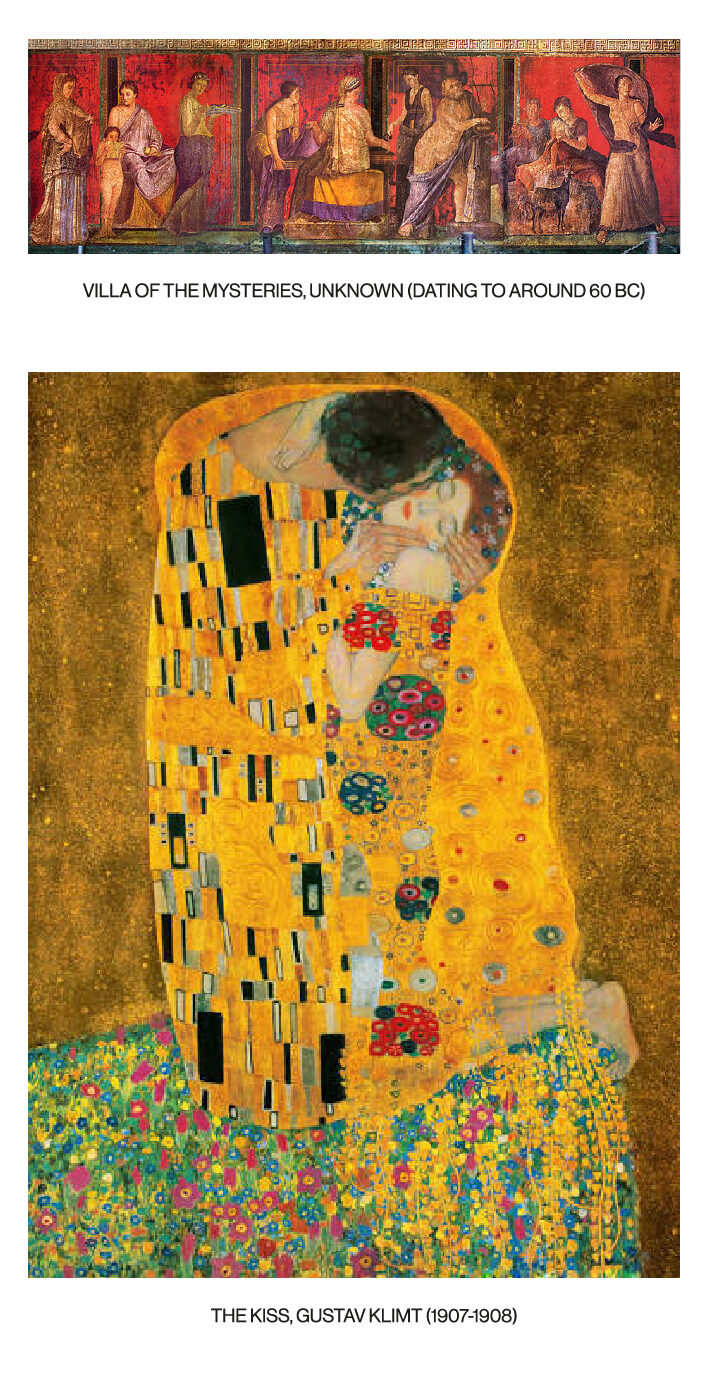
Pompeia was born from a genuine artistic and archaeological inspiration: the excavations of Pompeii, at the end of the 19th century, uncovered frescoes and decor that fascinated all of Europe, Jacques Rouché and the chemist Georges Darzens included. The most famous work to emerge from these excavations is undoubtedly the great frieze of the Villa of the Mysteries, a monumental fresco running along three walls, depicting twenty-nine life-size figures in what appears to be a Dionysiac initiation rite, painted in that particular red we now call “Pompeian red”. It is still visible in situ today, just steps from the ruins of the city.
Several works can represent Pompeia, each in its own way. The great frieze of the Villa of the Mysteries, for one, with its deep red and amber background, directly evokes the amber, patchouli, and osmanthus that make up the fragrance’s base, that same warm density that lingers once the initial freshness has faded. The British painter Lawrence Alma-Tadema, himself fascinated by these same excavations since his trip to Italy in 1863, offers another possible facet: he devoted much of his work to reconstructing everyday Pompeian life, notably in A Favourite Custom (1909), which depicts a bathing scene in the thermal baths of Pompeii. There, golden light, pale marble, and an almost edible atmosphere of peach and ripe citrus echo the fragrance’s top notes of mandarin and peach. The jasmine and saffron of the heart, meanwhile, find their echo in that same golden, lightly spiced atmosphere that bathes the whole scene. Neither of these works directly inspired our fragrance, but each, in its own way, captures the same archaeological fascination, the same light, and the same quiet sensuality that Pompeia seeks to convey, note after note.
In the 19th century, an entire pictorial movement became fascinated with a largely fantasized Orient: golden palaces, precious fabrics, warm light. It’s this same cultural climate, more than any single work, that fed the creation of Rêve d’Or in 1889. One emblematic painting of this movement capture that atmosphere well: La Grande Odalisque (1814) by Jean-Auguste-Dominique Ingres known for its sumptuous interiors and golden hues, which echo the density of the musk, cedar, and amber in the fragrance’s base.
But if you’re looking for a work that more literally embodies the idea of a golden, sensual dream, two paintings come to mind naturally, each for a precise reason. The Kiss (1907-1908) by Gustav Klimt, with its lovers embracing against a backdrop of gold leaf, is perhaps the image most directly associable with the very name Rêve d’Or: the gold that dominates the canvas echoes the shimmering aldehydes of the top notes, that almost metallic spark that opens the fragrance before pink pepper and orange warm it up. The Dream (1910) by Henri Rousseau, depicting a reclining woman at the heart of a lush, dreamlike jungle, carries that same mix of quiet sensuality and total escape found in the fragrance’s heart, between raspberry, rose, and saffron, that fruity, floral touch nestled within an otherwise very dense composition. Neither of these works has a documented link to the fragrance’s creation, but each illustrates, in its own way, the quiet exuberance of this trail.
Softness and lightness
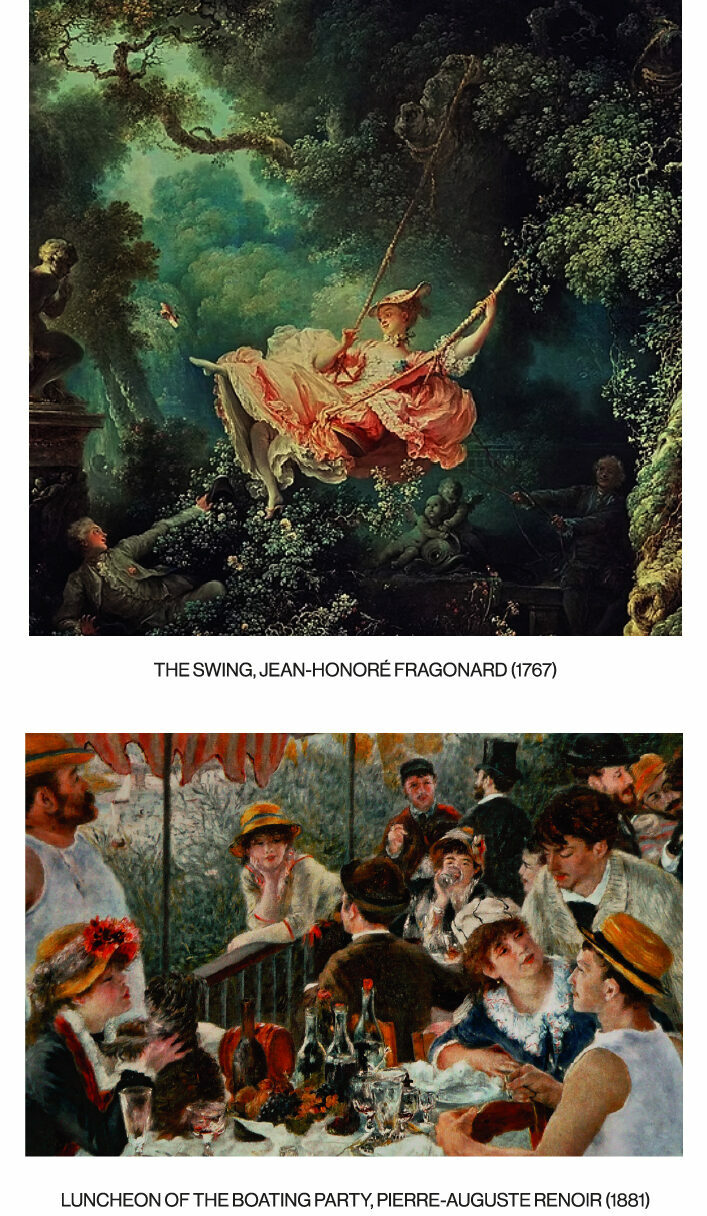
Here, the exercise becomes more freely imaginative. À la Reine des Fleurs was born in 1774, just a few years after The Swing (1767) by Jean-Honoré Fragonard, that aristocratic garden scene that became one of the pictorial symbols of the Age of Enlightenment. The story behind this painting is almost as famous as the work itself: commissioned by a baron who wished to be painted admiring his young mistress on a swing while a bishop, hidden in the shadows, pushes the rope without suspecting a thing, the painting perfectly embodies that lighthearted, consequence-free mischief so typical of Louis XVI’s reign, the very same period in which the house opened its first shop in Paris. The choice of this painting isn’t just a matter of timing: the tender green foliage and flower beds framing the scene directly evoke the verbena and orange blossom of the top notes, while the wilder garden in the background, with its tall grasses and dense shrubs, recalls the lavender, rosemary, and thyme of the heart. This is exactly the spirit of the fragrance: verbena and orange blossom as you might breathe the air of a garden at Versailles, never taking itself too seriously.
That same register of softness reappears, more than a century later and under an Impressionist brush, in Luncheon of the Boating Party (1881) by Pierre-Auguste Renoir. The scene is nothing imagined: it takes place on the terrace of the Maison Fournaise restaurant in Chatou, a real place Renoir frequented, and the faces filling the canvas are those of his own friends, among them Aline Charigot, the young woman playing with a small dog in the foreground, who would later become the painter’s wife. The choice is justified here by the golden warmth of the light, which recalls the tonka bean and vanilla of Héliotrope Blanc‘s base, and by the bouquet of flowers and fruit set on the table, a direct echo of the jasmine and ylang-ylang that open the fragrance. Nothing dramatic happens here, only the sweetness of a moment you sense they wanted to make last, among friends, on a Sunday afternoon. It’s one of the most famous paintings of Impressionism, now held at the Phillips Collection in Washington, and it beautifully captures that quiet indulgence and the nostalgia already present in the very instant it depicts.
The elegance of power
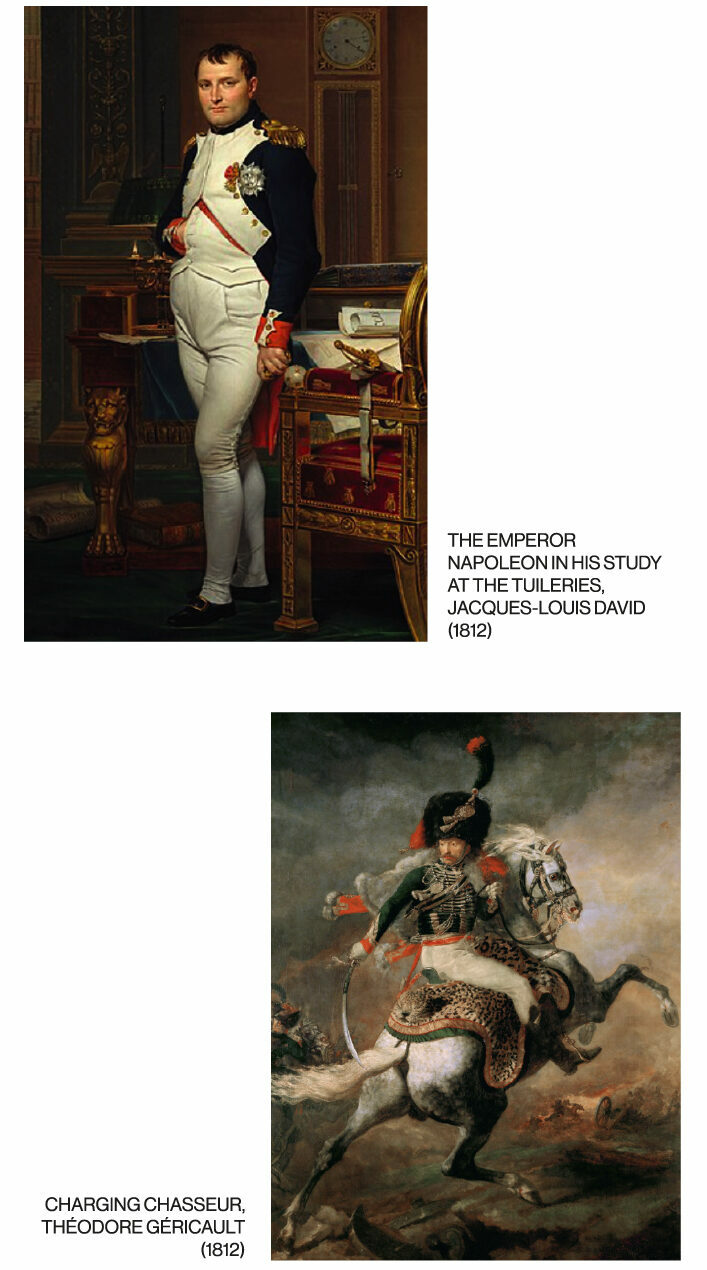
The Emperor Napoleon in His Study (1812) by Jacques-Louis David illustrates a different register altogether. The painting was commissioned by a Scottish admirer of the Emperor, and David slipped in several details that reveal his concern for historical accuracy: the clock reads 4:13, the hour at which Napoleon is presumed to have been working after a night spent drafting the Civil Code, a nearly burnt-out candle attests to it, and his sword rests on the chair, seemingly set aside in favor of the pen. The Emperor stands in uniform, in a study arranged with military precision. The choice of this work lies in its cool, nocturnal atmosphere: the white light of the candle and the blue-grey tones of the uniform evoke the mint and bergamot of Eau des Princes‘ top notes, while the studious silence of the study recalls the lavender and sage of the heart, notes also associated with focus and restraint. This isn’t a portrait of conquest, but one of quiet authority, that of a man who needs no staging to command a presence. That same assurance is what Eau des Princes carries, with its mentholated freshness and woody ambrox notes, designed for “the elegance of dandies, statesmen, princes, and crowned heads” of the 19th century.
That same prestige reappears in a more martial form in Charging Chasseur (1812) by Théodore Géricault. The painter was only twenty-one at the time, and this canvas, shown at the Paris Salon that same year, literally marks his public debut: it was painted in a single burst, in just a few weeks, with a boldness that stood in sharp contrast to the academic painting of the era. Contrary to what one might assume, it isn’t a portrait of a real officer but a composed figure, rearing horse and raised sabre, designed to capture energy and instant rather than an accurate likeness. The connection to Cuir de Russie is almost literal: the warm coppery and golden reflections on the uniform recall the mandarin and honey of the top notes, the smoke blurring the battlefield in the background evokes the smoky oud and nutmeg of the heart, and the leather of the saddle and boots, present throughout the canvas, is quite simply the fragrance’s own base note, supported by sandalwood and incense. Cuir de Russie carries this same duality, between worked leather and warmer notes of cardamom and sandalwood, for an elegance that never seeks to be discreet.
Toward the unknown
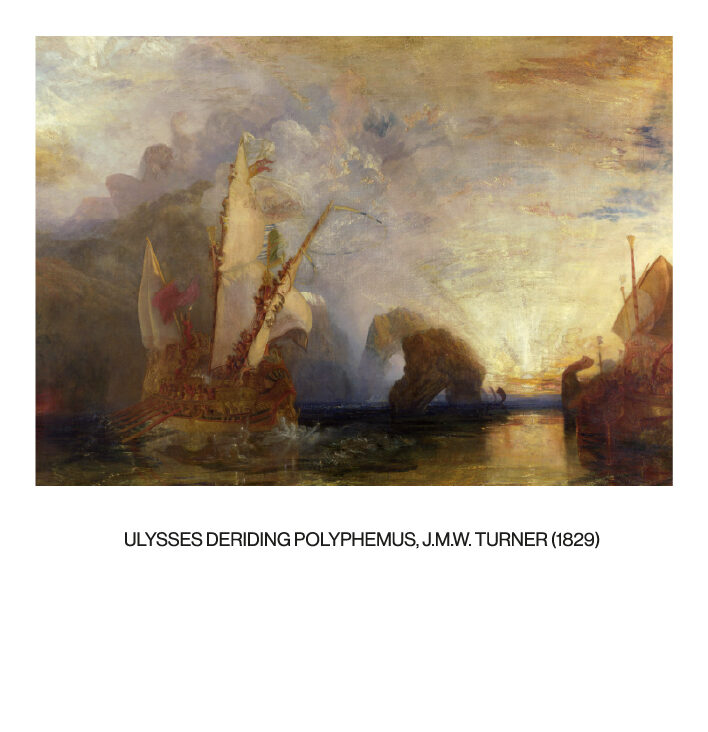
The work that perhaps best embodies this idea, a landscape that alone carries the entire promise of the unknown, is Ulysses Deriding Polyphemus (1829) by J.M.W. Turner. The painting depicts Ulysses’ ship sailing away at dawn after his escape from the Cyclops’ island, bathed in a dazzling solar light, between sea, mist, and blazing cliffs. The choice of this painting is justified note by note: the flashes of rosy light on the water recall the pink pepper and bergamot of the top notes, the sky ablaze with reds and oranges directly evokes the clove, nutmeg, and cinnamon of the heart, while the dark cliffs framing the composition, almost menacing, echo the cedar, sandalwood, and vetiver of the base, that structure which anchors the fragrance once the euphoria of the spices has settled. Turner makes the landscape itself the true subject of the painting: the journey, the unknown, and the danger are read in the light and the elements far more than in the scene itself. It’s one of the most admired works by one of the most celebrated landscape painters in art history, now held at the National Gallery in London, and it captures that same sense of departure toward the unknown that Un Parfum d’Aventure seeks to translate, in direct homage to the house’s international expansion and its encounters with many cultures.
These pairings remain a game, an invitation to look at a work of art or a fragrance differently. We’d love to know which paintings you would pair with each of our creations: feel free to share your own correspondences with us at info@piver.com.
Personalized Gift
Gift wrapping available with every order.

Customer Service
Our team is here to assist you: contact us by email.
Free Delivery
With any purchase $over 150
Complimentary Sample
Complimentary fragrance sample with purchases of 65€ or more.