Heliotropin, the molecule that changed perfumery


At L.T. Piver, nature has been our raw material since 1774. Verbena, iris, ylang-ylang, sandalwood, tonka bean: our fragrances draw the essence of their richness from natural ingredients, cultivated and distilled according to the most traditional methods. Yet the history of perfume holds a few turning points, moments when a scientific discovery answers an impasse that nature itself imposes. The emergence of heliotropin, at the end of the 19th century, is the most striking example of this, and one of the rare exceptions our house has ever knowingly made.

By L.T.Piver

A flower, a scent, a mystery

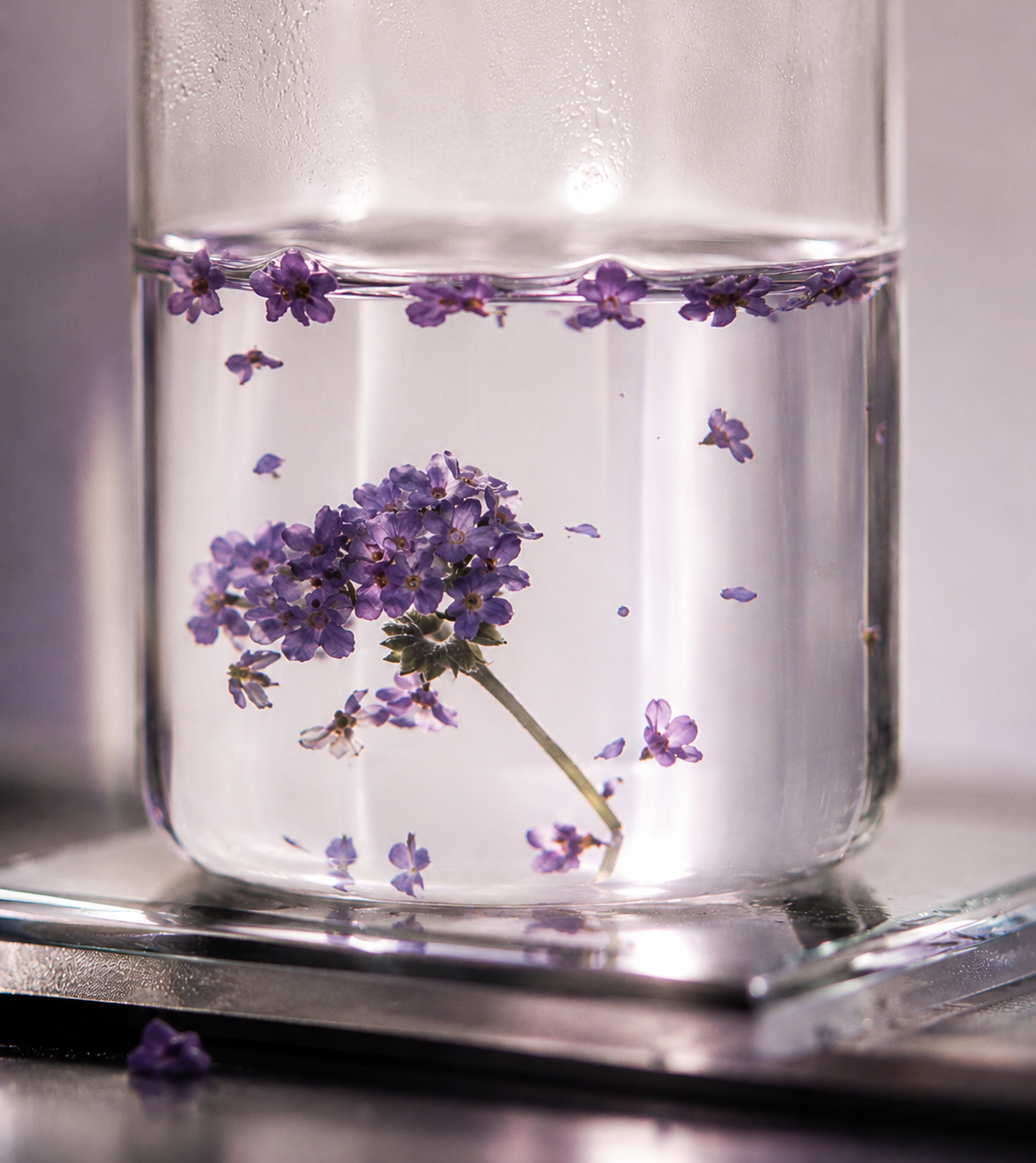
Heliotrope is a discreet little flower with mauve tones, whose name comes from the Greek helios (sun) and tropein (to turn): it follows the sun’s path across the sky. What fascinated 19th-century perfumers was not its beauty, but its scent. A round, powdery, almost gourmand trail, evoking vanilla, almond and a hint of cherry, a profile Anglo-Saxon perfumers nicknamed “cherry pie.”

Heliotropium arborescens, the species that concerns us here, belongs to the Boraginaceae family. Native to the Andean highlands of Peru, it was introduced to Europe in the 18th century, where it quickly won over gardens and bourgeois greenhouses, well before it caught the interest of perfumers. Its concentration of volatile odorant compounds is extremely low, so direct extraction by enfleurage or distillation captures almost none of its true scent. The enfleurage technique, which absorbs fragrance into a fatty substrate, works well on sturdy flowers like jasmine or tuberose, but fails almost entirely with petals as thin and poor in essential oil as heliotrope’s.

Even today, a natural heliotrope absolute yields less than 0.05% of the raw material’s weight, making it one of the rarest and most expensive materials in perfumery. Before synthesis, some perfumers tried to approximate its effect with tuberose and orange blossom accords, never quite recapturing its characteristic powdery roundness. For decades in the 19th century, the scent of heliotrope remained an olfactory fantasy: known, desired, but technically out of reach.
1869: the synthesis that changed everything

It was in 1869 that German chemists Wilhelm Rudolph Fittig and Wilhelm Heinrich Mielck isolated and characterized the molecule responsible for this particular scent. Its exact structure, an aldehyde with the formula C₈H₆O₃ and a molar mass of 150.14 g/mol, would be determined two years later, in 1871. It is named heliotropin, though it also goes by the names piperonal, heliotropylene, or, in strict chemical nomenclature, 3,4-methylenedioxybenzaldehyde.

Structurally, heliotropin belongs to the family of aromatic aldehydes, alongside benzaldehyde and vanillin, with which it shares a related carbon skeleton. It is precisely this methylenedioxyphenyl group that gives it its powdery, slightly almond-like facet, so close to what is naturally perceived on the heliotrope flower, even though the molecule does not exist as such in the plant’s natural essence.

Perfumers began using it in their compositions in the very early 1880s, and it quickly became a pillar of violet, mimosa, tuberose, and frangipani accords.

This breakthrough is part of a broader movement. The end of the 19th century saw the birth of modern perfume chemistry, with the arrival of synthetic molecules (ionones, vanillin, coumarin) that considerably widened the olfactory palette available to perfumers, until then limited to materials extracted from nature alone. Heliotropin ranks among the very first striking examples of this transformation, alongside vanillin, synthesized a few years earlier, in 1874.

Alphonse and Lucien Piver: the boldness of innovation

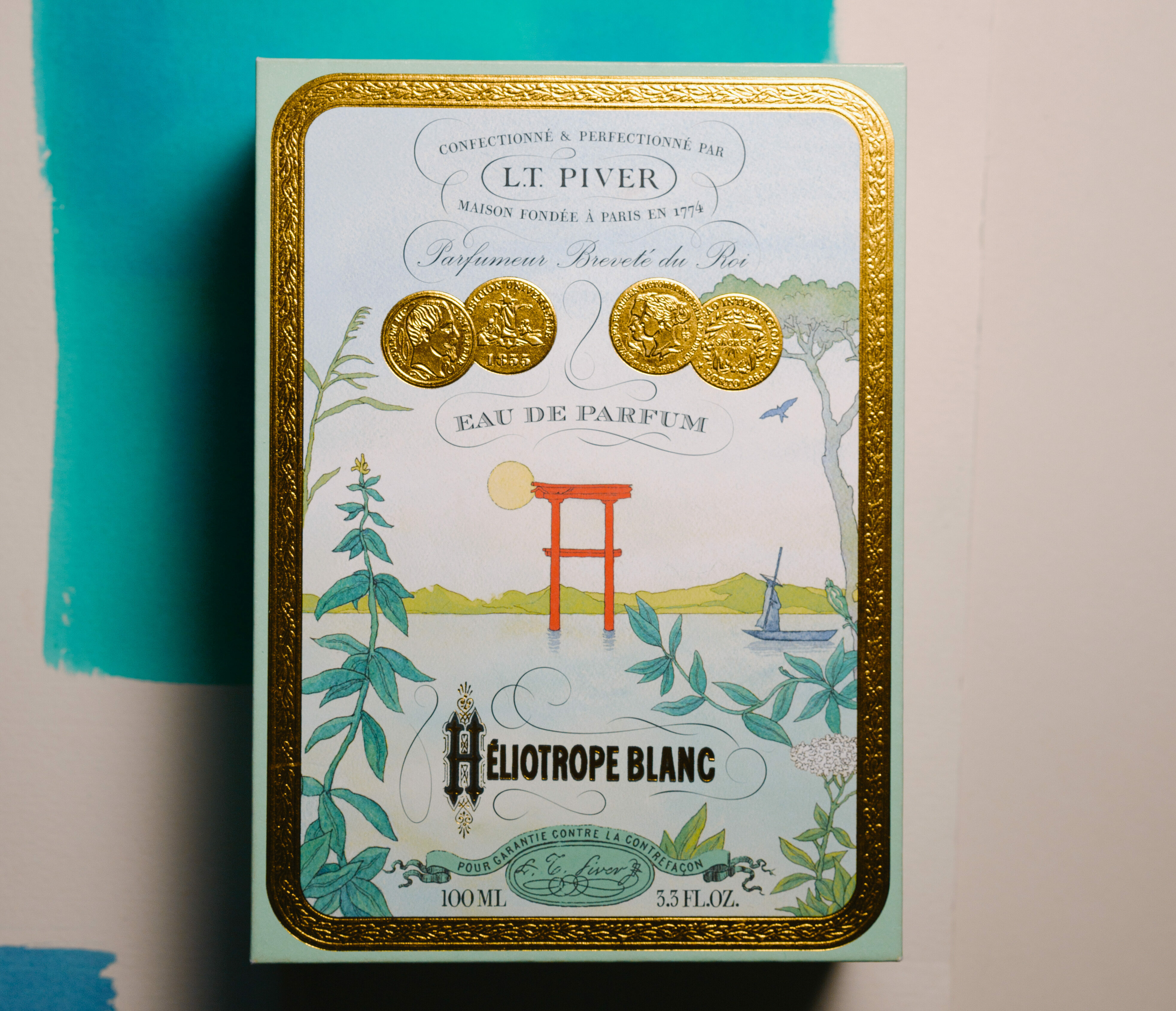
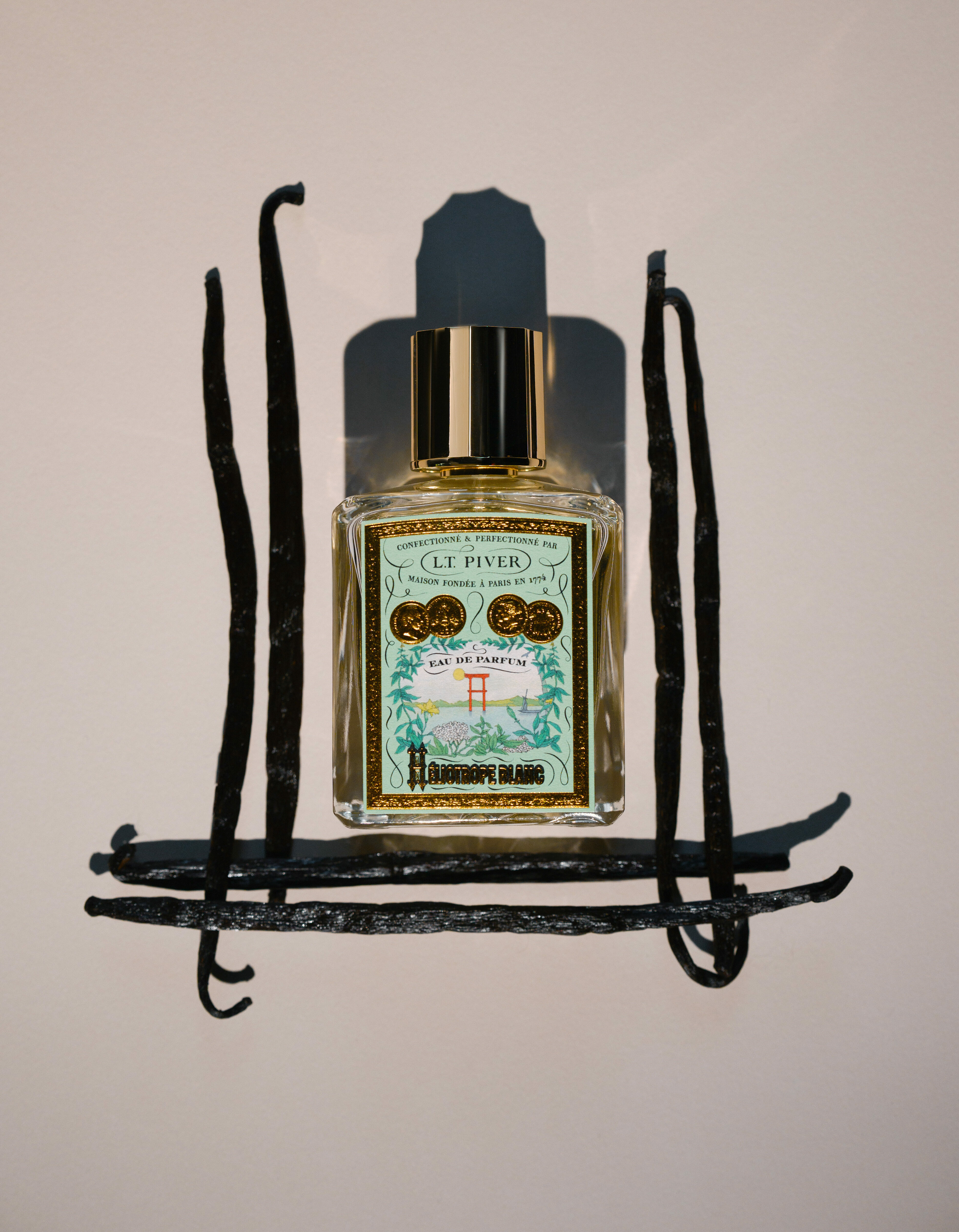
At L.T. Piver, it was Alphonse Piver and his son Lucien who immediately grasped the potential of this discovery. As early as 1885, barely a few years after the molecule’s first perfumed uses, they created Héliotrope Blanc, one of the very first fragrances in the world to feature this synthetic molecule as the structuring note of a composition.

It was a bold move, and not one they made lightly. The house had built its reputation on natural raw materials (flowers, resins, woods, spices), and that foundation was not about to change. But faced with a flower that nature refused to render with reasonable olfactory fidelity, Alphonse and Lucien Piver chose not to give up on this singular scent. They obtained it through the only chemically accessible path available at the time: organic synthesis. It was an exception, deliberately so, not a change of direction for the house.

The result exceeded their expectations. Héliotrope Blanc quickly became a cult fragrance, praised for its unprecedented roundness and enveloping softness. Its success has crossed decades and continents, reaching as far as the Caribbean islands, where its story still lives on today.

The story of heliotropin does not challenge L.T. Piver’s identity, it illuminates it. Since 1774, our house has always relied on the living world: iris rhizomes, lavender, sandalwood, or tonka bean. This natural heritage makes up the vast majority of our fragrances, today as it did then.

But a house that has crossed 250 years of history also knows how to recognize the rare moments when nature alone is not enough. Heliotrope is the perfect example: a very real flower, whose scent could only be faithfully revealed, at an accessible cost, through chemistry. Alphonse and Lucien Piver had the clarity of mind to seize this exception without ever making it a habit.

This is the same standard that still defines our house today: the natural as our foundation, and synthesis called upon only when it serves a beauty that nothing else could reveal.

Héliotrope Blanc today

More than a century after its creation, Héliotrope Blanc remains true to the spirit intended by Alphonse and Lucien Piver: a comforting caress, powdery and gourmand, carried by notes of ylang-ylang, almond, and tonka bean.

Olfactory pyramid:

  • Top notes: Jasmine, Ylang-Ylang
  • Heart notes: Heliotrope, Almond
  • Base notes: Tonka Bean, Vanilla

A fragrance for those who love round, enveloping trails, inherited from an innovation that once changed the face of perfumery. Héliotrope Blanc is available today in two versions, an Eau de Parfum for a more assertive presence, and an Eau de Cologne for a lighter, fresher take on the same powdery trail.

A powdery caress that has traveled through time since 1885, ready today to envelop your skin.

Discover

Personalized Gift

Gift wrapping available with every order.

Customer Service

Our team is here to assist you: contact us by email.

Free Delivery

With any purchase over 55€ to pickup point

Complimentary Sample

Complimentary fragrance sample with purchases of 65€ or more.