Fragrance and Music: Olfactory Synesthesia


There is a vocabulary that perfumery borrowed from music without ever quite giving it back. We speak of "notes" to describe a fragrance's components, "accords" for their harmonious combinations, an "olfactory pyramid" for the way a fragrance unfolds over time, much like a score unfolds from its first movement to its last. This isn't a linguistic accident: composing a fragrance and composing music rest on the same principle, a sequence unfolding in time, designed to create an emotion that wouldn't exist if the elements were perceived separately.

We wanted to take this kinship all the way: pairing each of our seven fragrances with a musical work that shares its spirit, grouped here by broad emotions rather than by simple format.

By L.T.Piver

Lightness and Elegance

Created in 1774 and worn by Queen Marie-Antoinette herself, a great lover of music, À la Reine des Fleurs opens on verbena, petitgrain, and orange blossom, before settling into a heart of lavender, rosemary, and thyme, then fading into a base of musk and ambrox. This three-act structure, light and unpretentious, directly evokes one of the most performed and most universally recognizable pieces in all of classical music: Eine kleine Nachtmusik (1787) by Wolfgang Amadeus Mozart. A clear, airy music, never heavy-handed, that never seeks to impress through power but through the sheer grace of its construction, exactly like this fragrance born the same decade. Mozart composed it in Vienna while working in parallel on Don Giovanni, one of his darkest and most tormented operas: this light serenade feels almost like a breath, a moment of carefree grace stolen between two graver pages. It belongs to a genre highly prized in Viennese salons at the time, the string serenade, meant to accompany evening receptions rather than to be listened to in silence in a concert hall. Its four short movements flow into one another without ever lingering too long, not unlike the way a fragrance’s top, heart, and base notes follow one another without ever crowding each other out. It is perhaps this economy of means, this ability to strike true without ever overstating it, that most closely links these two creations, born only a few years apart.

Created in 1850 by the perfumer Alphonse Piver, Eau des Princes opens on a breath of mint and bergamot, settles into a heart of lavender and sage, before calming into a base of musk and patchouli. Legend has it that Napoleon I himself would pour a few drops onto a sugar cube before placing it in his mouth. That same princely elegance is found in The Blue Danube (1866) by Johann Strauss II, arguably the most famous waltz in the world: a music of perfectly mastered elegance, never austere, instantly recognizable from its opening bars. The fragrance’s mentholated freshness carries that same controlled liveliness, that same elegant restraint that never excludes pleasure. Amusingly, the work didn’t always enjoy this immediate success: originally composed as a choral piece for the Vienna Men’s Choral Association, it went almost unnoticed at its premiere. It was only once replayed without lyrics, in a purely orchestral version, at the 1867 Paris World’s Fair, that it became the triumph we know today. Its opening theme, that tremor of strings followed by the brass entrance of the main melody, carries the same art of first impression as a fragrance’s top note: a discreet opening that hints at the scale of what’s still to come.
Exoticism and Reverie

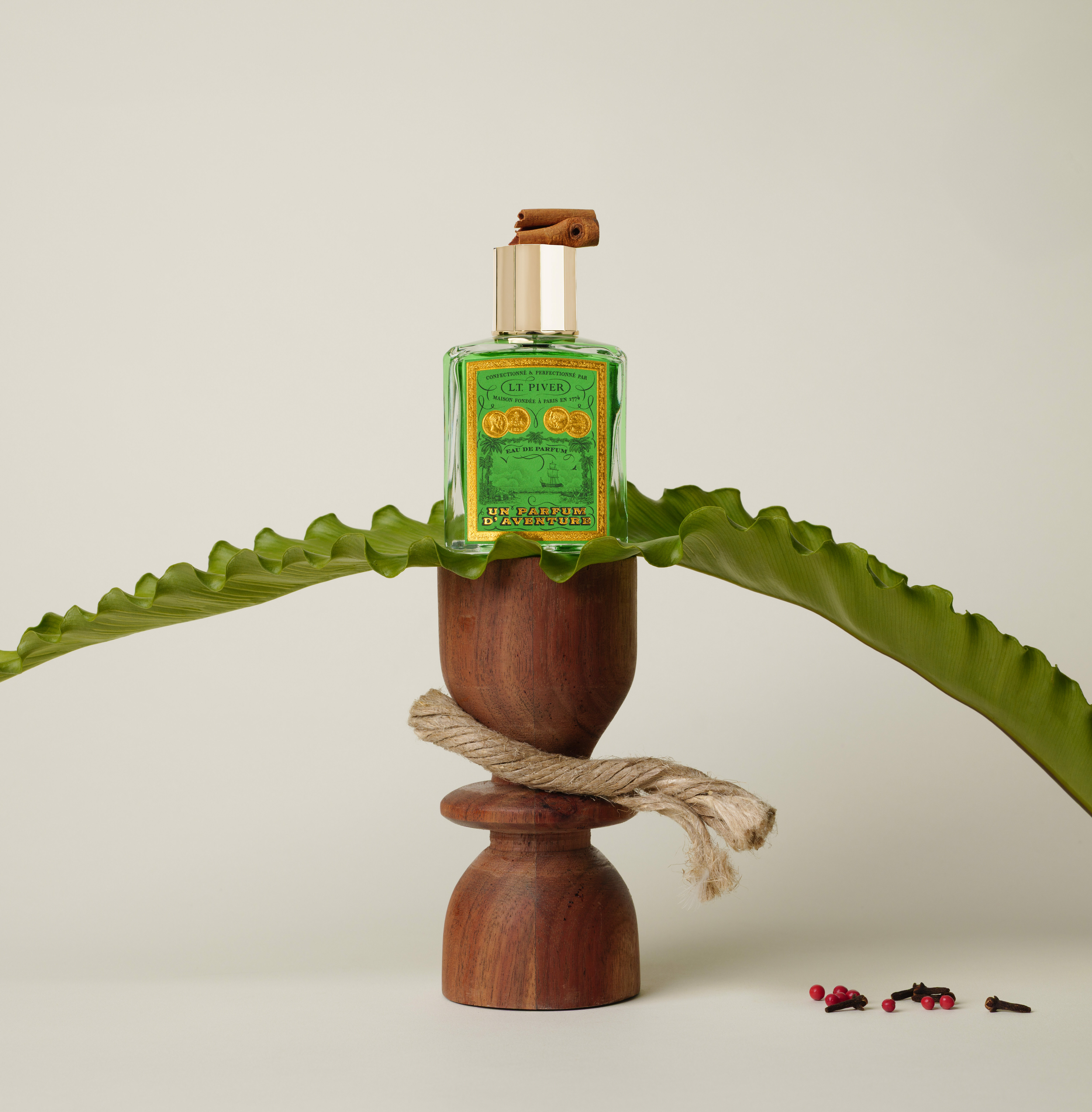
Born in 1863 under the Second Empire, on the occasion of the great World’s Fair that drew nearly eight million curious visitors from around the globe, Un Parfum d’Aventure opens on pink pepper and bergamot, settles into a heart of clove, nutmeg, and cinnamon, before ending on a base of cedar, sandalwood, and vetiver. That same fascination with faraway places runs through Scheherazade (1888) by Nikolai Rimsky-Korsakov, a symphonic suite built entirely as a journey, between imagined oriental melodies, shimmering brass, and themes that answer one another from movement to movement like spices layering on top of each other. The work draws directly on the One Thousand and One Nights and unfolds in four movements, each evoking a different tale, carried by a solo violin that returns throughout the score to embody the voice of Scheherazade herself. It’s this episodic structure, this sense of crossing several sonic landscapes within a single work, that echoes the spirit of the fragrance: a world tour of spices in a single trail, from the routes of the Levant to those of the Americas.

Composed in 1907 by Jacques Rouché and Georges Darzens, inspired by the archaeological excavations of Pompeii, Pompeia opens on the sunlit brightness of mandarin and peach, settles into a heart of jasmine and saffron, before anchoring itself in a chypre base of amber, patchouli, moss, and osmanthus. That same sensual, ancient warmth is found in the Prelude to the Afternoon of a Faun (1894) by Claude Debussy: a languorous, almost drowsy music, itself inspired by a mythological, Mediterranean imagination. Debussy drew on a poem by Stéphane Mallarmé, which describes the reverie of a half-asleep faun after glimpsing, or perhaps only imagining, nymphs in the afternoon heat. The solo flute that opens the piece marked a turning point in the history of music, with many musicologists regarding it as the birth of musical modernism. The two works share that same suspended warmth, that same voluptuous unease, of an afternoon that never seems to want to end.

When a Single Note Breaks Away from the Chorus

Created in 1885 under the direction of Lucien-Toussaint Piver, Héliotrope Blanc was the very first fragrance to feature heliotropin, a synthetic molecule with powdery, vanilla-like accents. Its pyramid opens on a bouquet of jasmine and ylang-ylang, settles into a heart of heliotrope and almond, before blossoming into a base of tonka bean and vanilla. That same enveloping softness, almost weightless, is found in Clair de lune (composed around 1890, published in 1905 as part of the Suite bergamasque) by Claude Debussy, arguably the most famous and most performed piano piece in the world: a music with no hard edges, all roundness, that never imposes its presence but settles in slowly, like a caress rather than a statement. It is the only piece in this selection written for a solo instrument, and that’s no coincidence: Héliotrope Blanc is likewise the most “soloist” of our seven fragrances, built almost entirely around a single flower. The title itself comes from a poem by Paul Verlaine, in which a nocturnal landscape becomes the mirror of a soul that is both calm and melancholic. Debussy captures mainly the image, that diffuse white light that casts no sharp shadow, and translates it into a melody that seems to hang suspended in the air rather than played. The piece has since long outgrown the concert hall: it appears just as often in popular films as in advertisements, proof that a well-composed softness crosses the decades without ever going out of style, exactly like the formula for Héliotrope Blanc, almost unchanged since 1885.

Power and Rising Tension

Conceived in 1889, the very year the Eiffel Tower rose into the Paris sky, Rêve d’Or owes part of its character to the perfumer Georges Darzens, who introduced into it the very first aldehydes ever used in a fragrance’s top notes in the history of perfume. Its pyramid opens on aldehydes, pink pepper, and orange, settles into a heart of raspberry, rose, and saffron, before ending on a base of musk, cedar, and amber. This inaugural spark, this almost metallic shimmer at the opening, recalls the continuous build of Boléro (1928) by Maurice Ravel, written for the dancer Ida Rubinstein around the image of a woman dancing alone in a Spanish tavern. The entire work rests on an almost provocatively simple principle: a single melody, repeated without ever varying, carried by a drum relentlessly hammering the same rhythm, while the orchestration gradually swells until it overwhelms the entire hall. That same logic of accumulation is found in the pyramid of Rêve d’Or: nothing changes abruptly, each note simply adds itself to the one before, for an intensity that grows without ever breaking its thread.

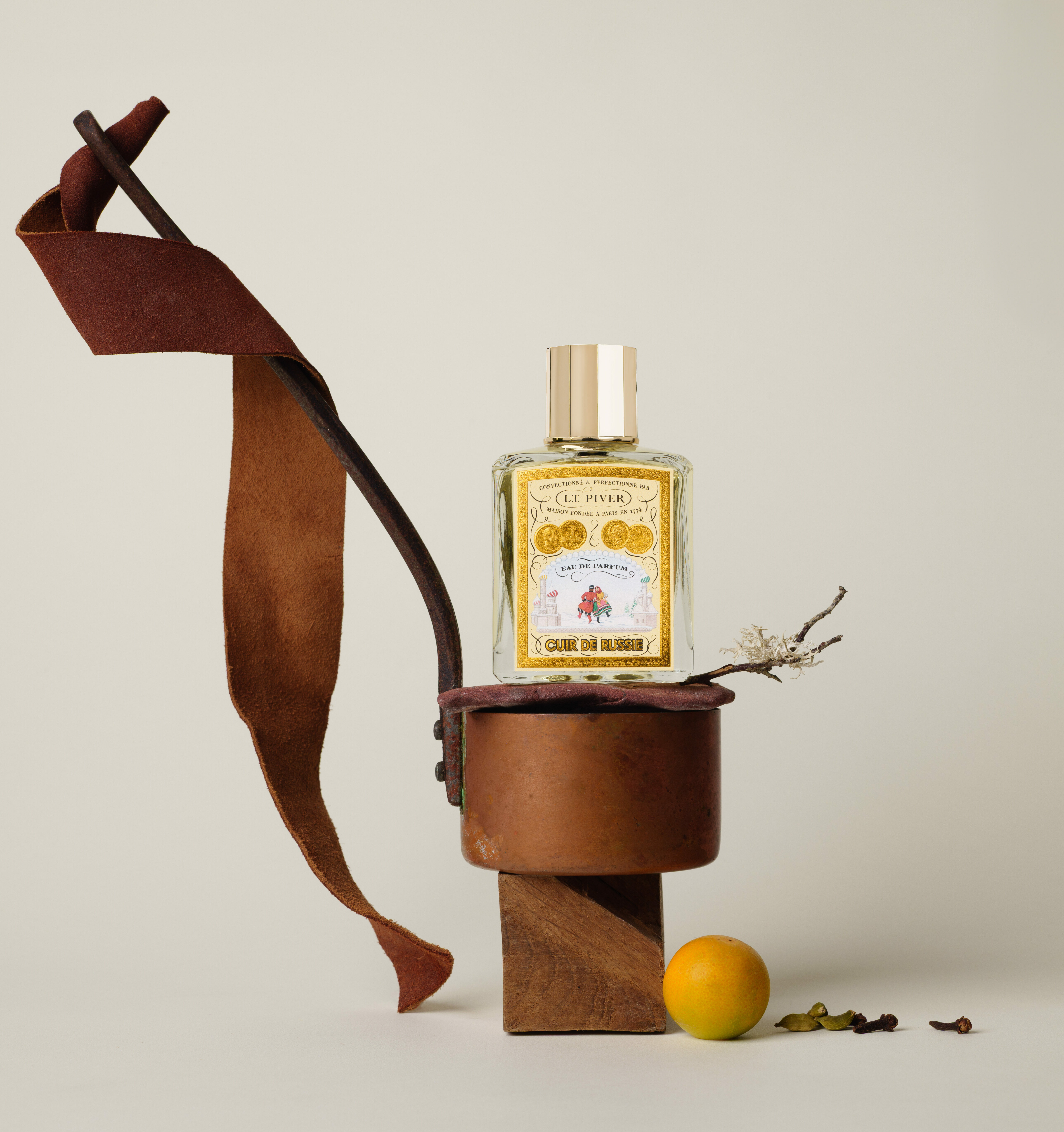
Created in 1892 at the initiative of Jacques Rouché, then director of the House and of the Paris Opera, Cuir de Russie draws on a legendary leather, salvaged from the ocean depths in the wreck of the Metta Catharina in 1786, then smoked with birch according to old Russian customs. Its pyramid opens on mandarin and honey, settles into a heart of smoky oud and nutmeg, before anchoring itself in a base of leather, sandalwood, and incense. That same dark density and contained tension are found in The Ride of the Valkyries (1870) by Richard Wagner, drawn from Die Walküre, the second installment of the monumental Ring of the Nibelung cycle, which depicts these mythological warrior maidens tasked with carrying fallen heroes to Valhalla. The motif is recognizable in an instant: strings surging like a gallop, brass answering each other in echo, a tension that never fully settles. The choice isn’t purely musical: Jacques Rouché, in running the Paris Opera, lived daily within this world of great orchestral drama, the very same dark, intense elegance carried by this trail.

What links a fragrance and a piece of music, at its core, is that neither ever gives itself away all at once. You have to wait, let time do its work, for either one to reveal everything it has to offer. And you, what music would you pair with your favorite fragrance?

Discover our Eaux de Parfum

Personalized Gift

Gift wrapping available with every order.

Customer Service

Our team is here to assist you: contact us by email.

Free Delivery

With any purchase over 55€ to pickup point

Complimentary Sample

Complimentary fragrance sample with purchases of 65€ or more.