The journey of our workshops: from Paris to Chartres.


The history of a perfume house isn't told only through its creations: it's also told through the places where it took shape. Since 1774, L.T. Piver has never stopped manufacturing in France, though the face of that manufacturing has changed considerably over the past two centuries, between Parisian shops, a first industrial factory, the flower fields of Grasse, a large-scale manufacture, and a contemporary workshop. Five places, five eras, one enduring standard.

By L.T.Piver

From shops to the first industrial factory

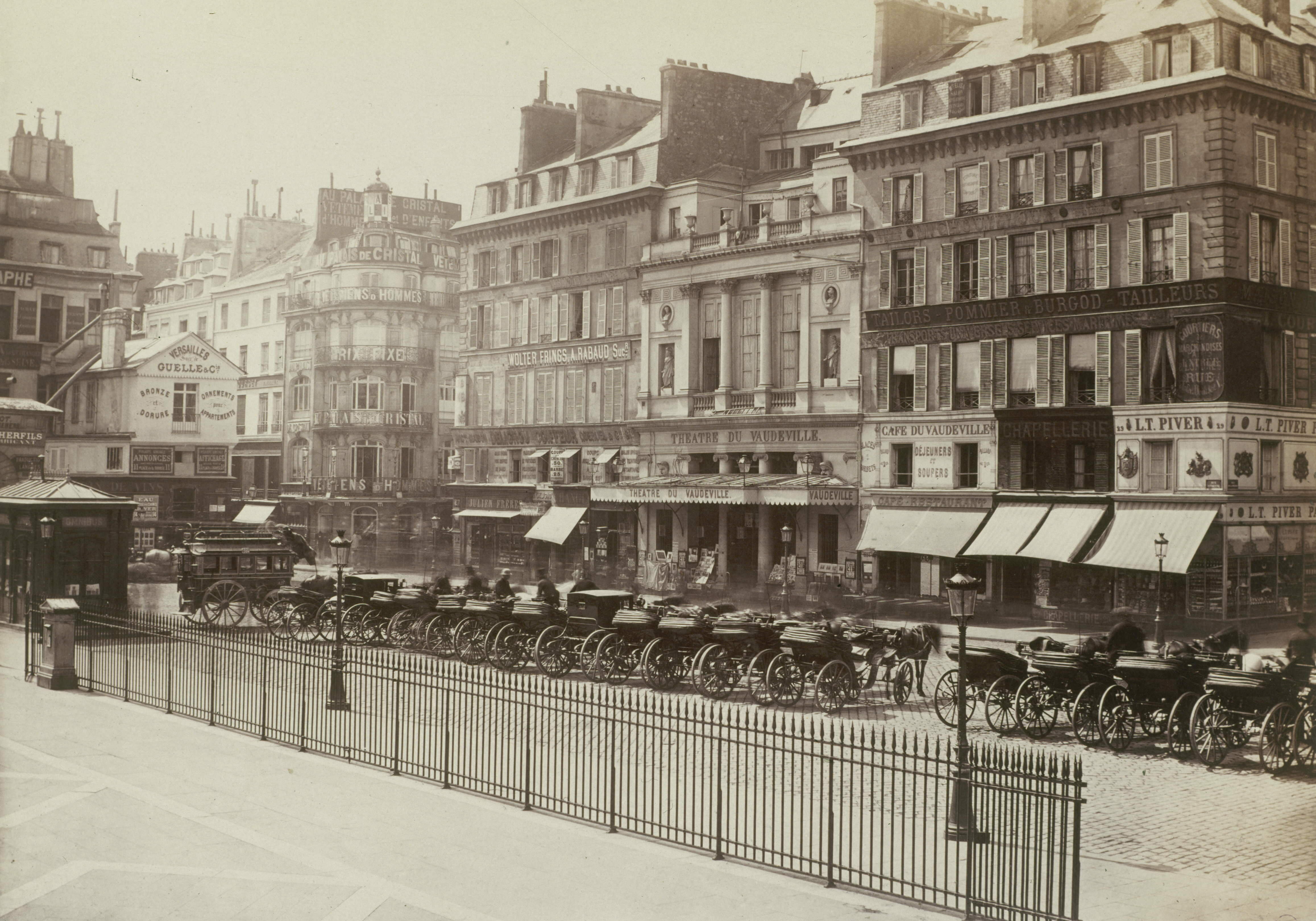
In the beginning, the House set up at the liveliest crossroads of the capital: Place Vendôme, Place de la Bourse, Chaussée d’Antin, and 111 rue Saint-Martin as early as 1809, today known as rue de la Paix. These were true workshops of composition, at a time when perfume was still made on an artisanal scale, for a clientele often known by name. It was also from these addresses that the house began, as early as 1817, to cross borders, opening branches in London, Brussels, and Barcelona. To meet this growing demand, Louis-Toussaint Piver leased land at La Villette in 1826, where he set up a modern factory, equipped with the latest technological advances of the time: a first shift toward an industrial scale. This factory was expanded in 1865, a sign that demand kept growing as the house’s catalogue kept expanding.
From Grasse to Aubervilliers, the industrial age

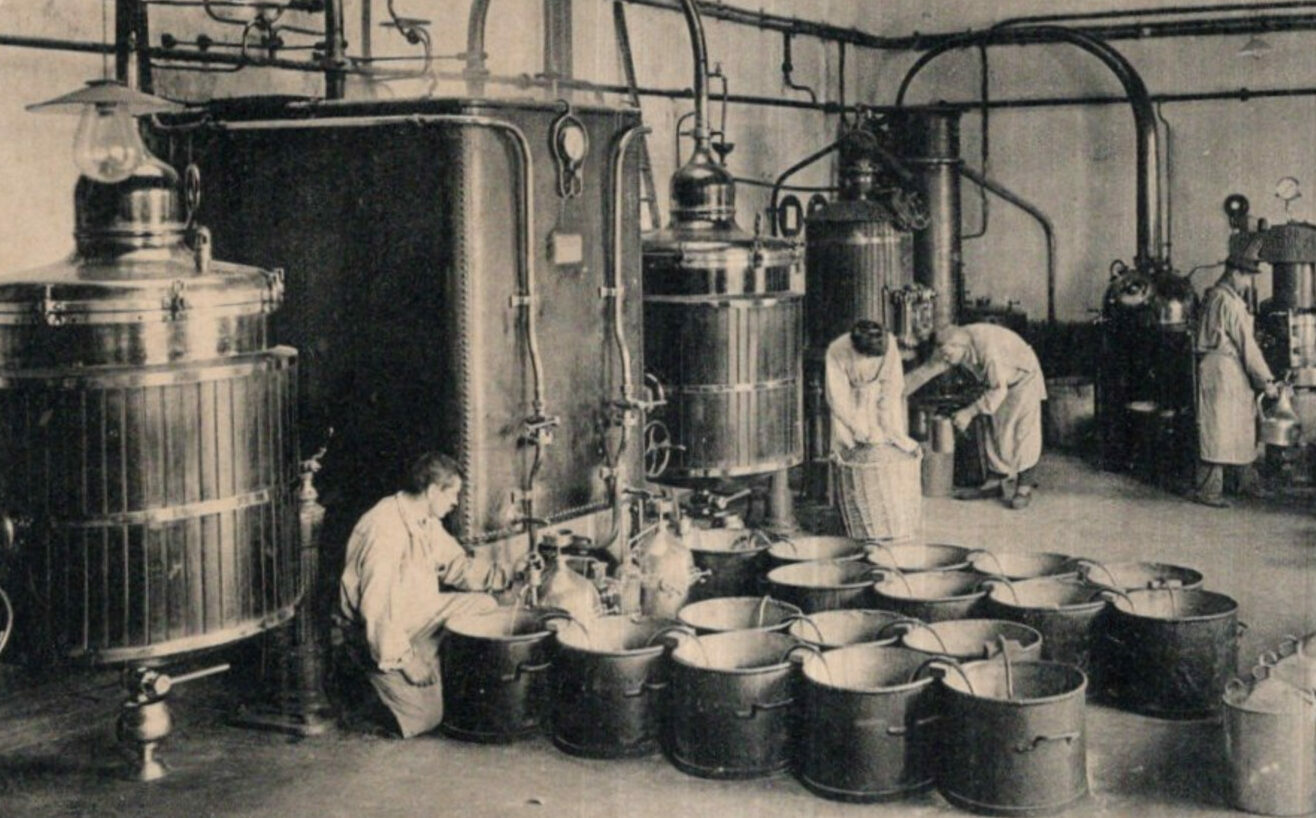
To get closer to the raw material itself this time, Alphonse Piver chose, in 1859, to settle in Grasse, setting up a distillery dedicated to flowers. Grasse was already, at that time, becoming the world capital of perfume, driven by its Mediterranean climate and the exceptional concentration of growers settling there: getting closer to Grasse meant getting closer to the fields of jasmine and rose all the way to the stills. It also marked the beginning of a supply of natural raw materials, mainly sourced from Grasse and Italy, a standard of quality the house has never abandoned since. Ten years later, in 1869, the house took a further step by creating a production site in Aubervilliers of an entirely different scale: nearly 1,500 people worked there, making this workshop one of the most important in all of French perfumery at the time. This was the moment L.T. Piver definitively shifted from counter-based craftsmanship to a true industry, capable of supplying the hundreds of outlets the house would soon count around the world.

Today: Chartres and the Cosmetic Valley

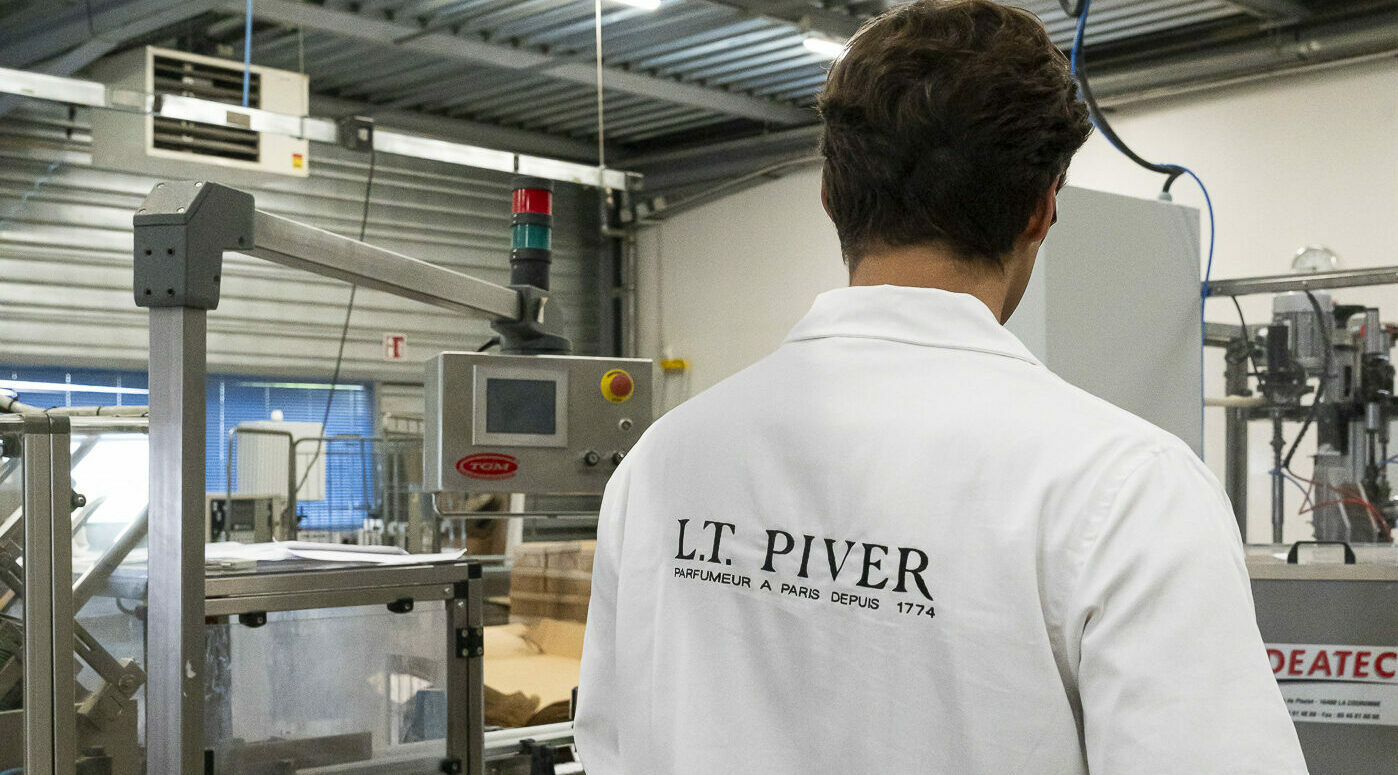
It is in Chartres that this tradition of French manufacturing continues today, at the heart of the Cosmetic Valley, one of the world’s leading hubs of the cosmetics and perfume industry. The House operates its own factory there, allowing it to guarantee the quality and authenticity of its time-honored manufacturing processes, from drawer-maturation through to final packaging. This process, handed down by Louis-Toussaint Piver himself and jealously preserved ever since, allows each fragrance, made up of more than 100 natural ingredients, to slowly mature for three to four months before being bottled. It is this same expertise, practiced without interruption since 1774 in a French manufacture, that earned the house the Entreprise du Patrimoine Vivant label, awarded by the French State to recognize companies that combine innovation and tradition, local roots and international reach. An official recognition of a gesture that, at L.T. Piver, has never wavered since 1774: refusing to outsource what gives a fragrance its soul.

French-made, worldwide renown

What stands out, looking back on this journey, is the consistency of the same balance: producing in France, without exception, while selling to the entire world. From the Chartres workshop, creations are shipped to around a hundred boutiques worldwide, from Europe to the Middle East, from the United States to Asia, echoing the international reach that already built the house’s reputation in the 19th century.

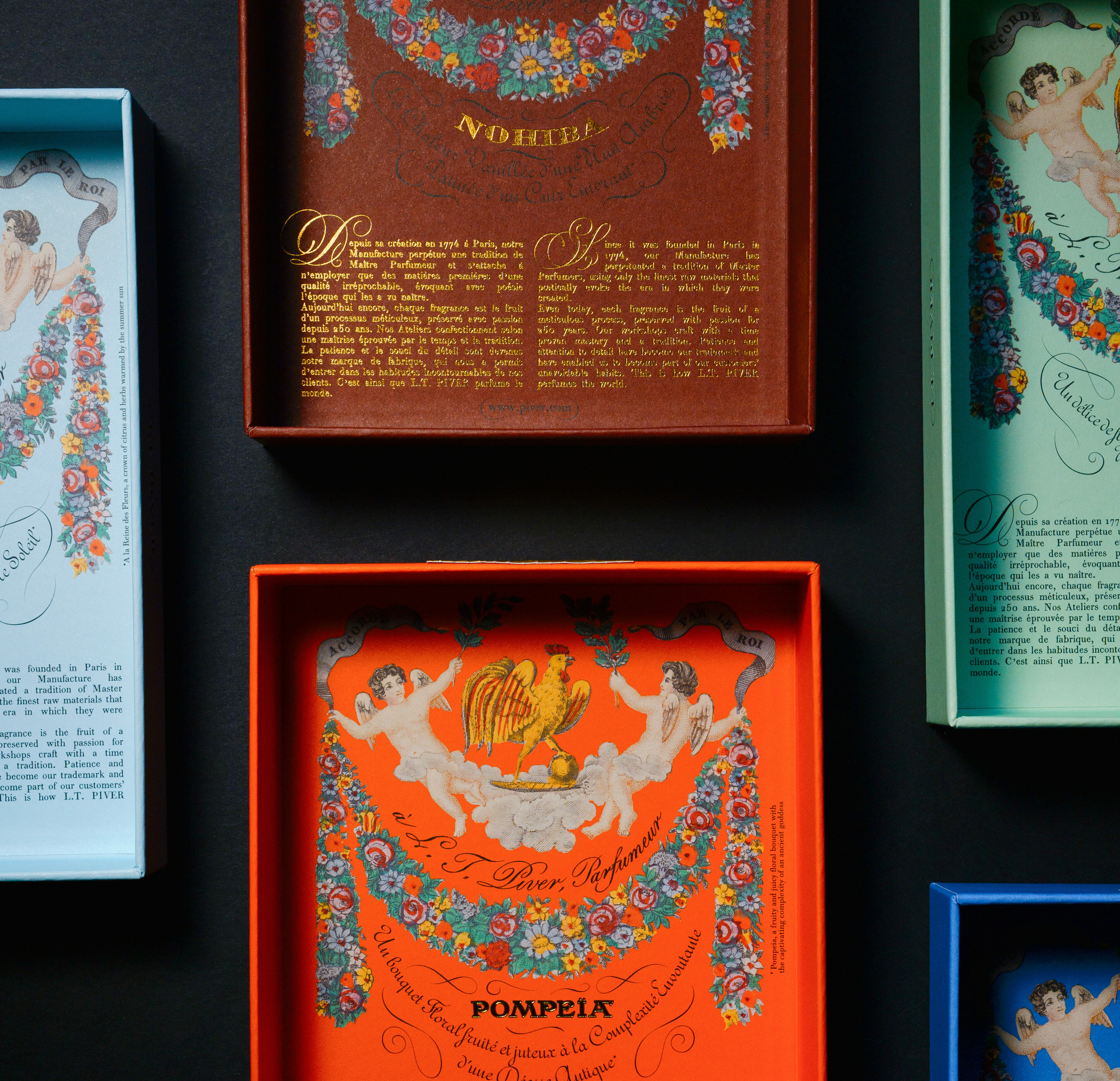
What has traveled from these workshops isn’t just bottles, but fragrances that became emblematic in their own right: À la Reine des Fleurs, worn by Marie-Antoinette as early as 1774; Héliotrope Blanc, one of the very first fragrances in the world to feature heliotropin in 1885; Cuir de Russie, inspired in 1892 by leather salvaged from the wreck of the Metta Catharina; Pompeia, born in 1907 from a fascination with the archaeological excavations of Pompeii; and Rêve d’Or, one of the first fragrances to feature aldehydes in its top notes, before receiving, in 1925, an Art Deco bottle designed by Süe and Mare for Baccarat.

It is this material, as much as the factories themselves, that built the house’s international reputation, manufactured without interruption on the same French soil since 1774.

Discover our creations, made in France since 1774.

Perfumery

Personalized Gift

Gift wrapping available with every order.

Customer Service

Our team is here to assist you: contact us by email.

Free Delivery

With any purchase $over 150

Complimentary Sample

Complimentary fragrance sample with purchases of 65€ or more.