Another Way to Read Perfume.


A novel has its own top, heart, and base notes too: an opening that draws you in, a plot that settles into place, an ending that lingers in memory long after the last page. We wanted to take this parallel further by pairing each of our seven fragrances with a literary work that shares its spirit, carried by names everyone knows. A game of imagination rather than a lineage: none of these works shaped the creation of our fragrances, but each, in its own way, reveals a facet of them.

By L.T.Piver

Lightness of the 18th Century

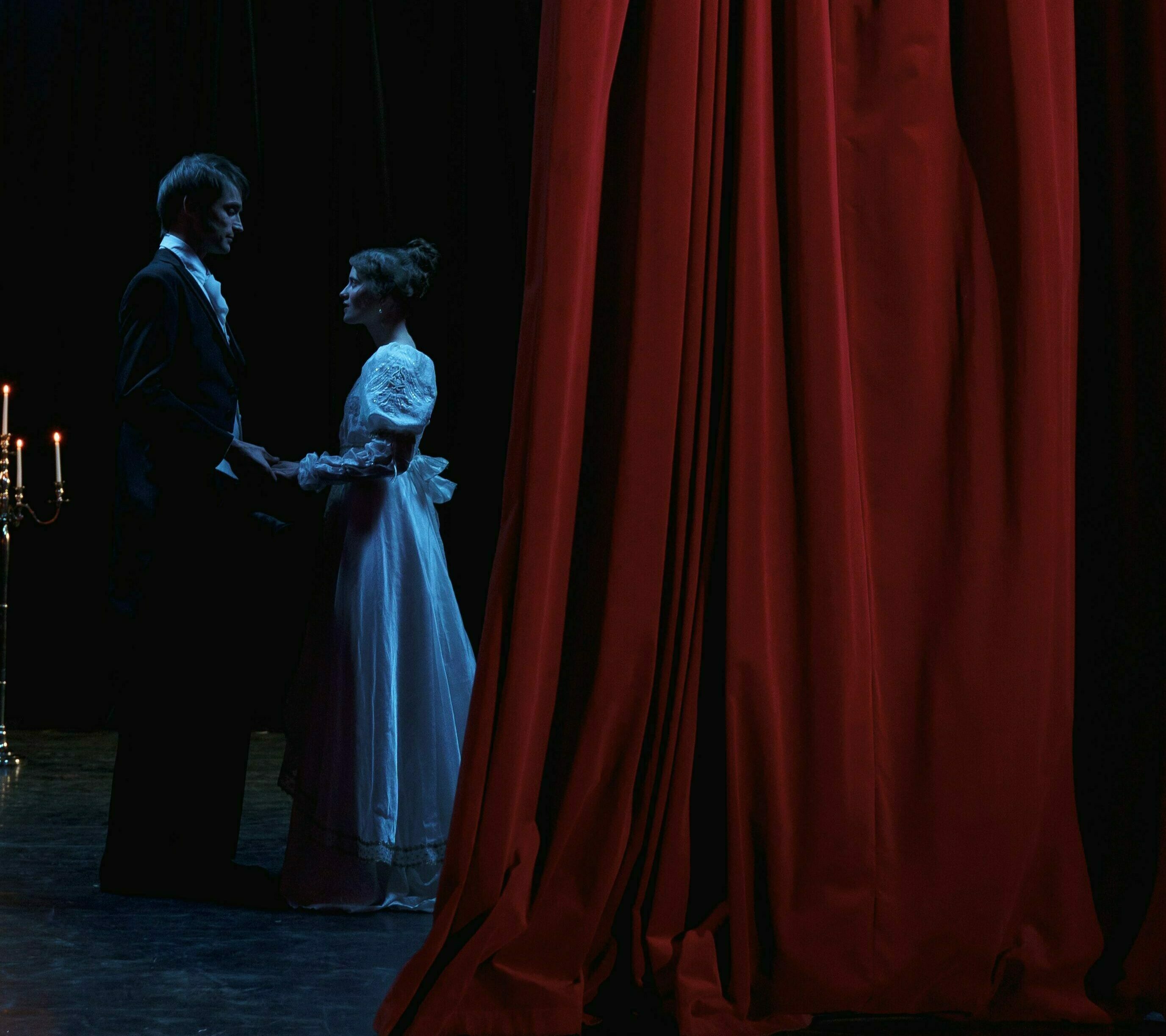
Our very first fragrance was born in 1774, the same year Michel Adam opened his shop “À la Reine des Fleurs” in Paris, almost immediately adopted by Marie-Antoinette herself. It was also the era in which the reputation of a man of many lives grew in the salons of Paris: Pierre-Augustin Caron de Beaumarchais, by turns a trained watchmaker, a musician, a businessman, and even a secret agent who helped covertly finance the American Revolution, before becoming one of the most performed playwrights of his century. His most famous comedy, The Marriage of Figaro, written in 1778, first ran into royal censorship, Louis XVI deeming it too insolent toward the nobility, before the play was finally authorized on stage in 1784, under pressure from the court, Marie-Antoinette chief among them, curious to discover a text all of Paris was already passing around in private readings. The play tells, in a lively and mischievous tone, the schemes of a servant cleverer than his master, in a whirlwind of mistaken identities that never quite settles. That same liveliness, that same light-hearted carelessness runs through À la Reine des Fleurs: verbena and orange blossom in the top notes, lavender and rosemary in the heart, a trail that never takes itself too seriously, much like this comedy that ended up unsettling the court by daring to laugh at everything.
 

Ambition and Power

Created in 1850 for “the elegance of dandies, statesmen, princes, and crowned heads,” Eau des Princes finds an echo in The Red and the Black, one of the most widely read novels by Stendhal, born Henri Beyle, published in 1830 under the subtitle “A Chronicle of 1830.” Stendhal himself led a double life not unlike his character’s: a career diplomat, French consul in Italy for many years, he wrote his novels on the side of this official existence, often under a pen name, with little success in his lifetime. It would take until the late 19th century, long after his death, for critics to finally recognize him as one of France’s greatest novelists. His book follows Julien Sorel, an ambitious and calculating young man determined to climb the ranks of a society where appearance and self-control matter as much as actual merit, a character Stendhal reportedly drew in part from a real criminal case of his time. That same elegant restraint, that same freshness that never tips into excess, defines the fragrance: a quiet assurance, made for those who know that raising your voice never wins the argument.

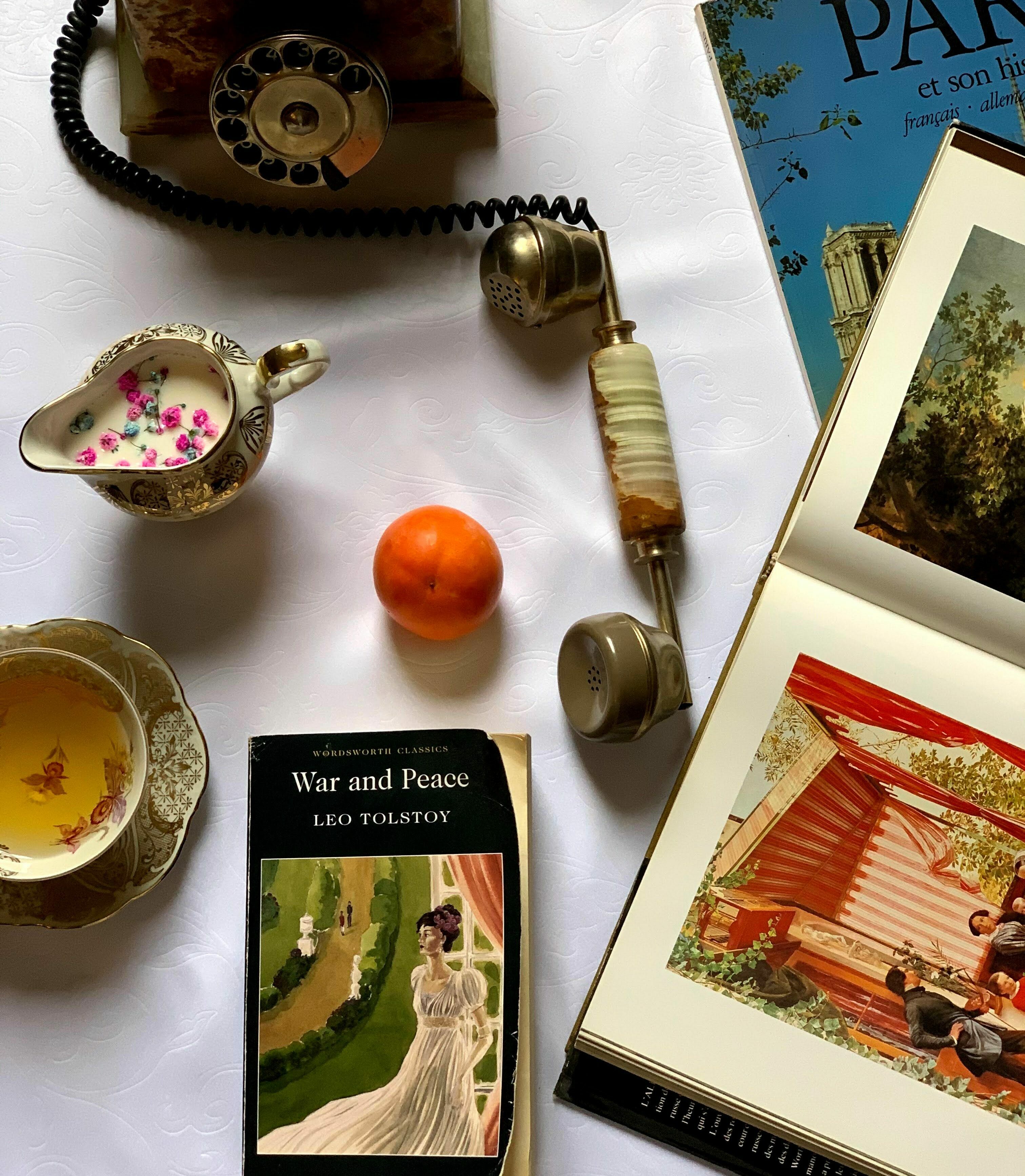
This same world of power and ambition appears, in a more martial form, in War and Peace by Leo Tolstoy, one of the most celebrated novels in the world, published between 1865 and 1869 after six years of writing. The book runs past 1,200 pages and follows several Russian aristocratic families through the Napoleonic Wars, weaving together society salons and battlefields, philosophical reflections on chance, and sweeping historical fresco, up to the Battle of Borodino, which forms its dramatic peak. Cuir de Russie, created in 1892 and inspired by a legendary leather salvaged from the wreck of the Metta Catharina in 1786, carries this same duality between splendor and gravity: mandarin and honey in the top notes, smoky oud and nutmeg in the heart, then a base of leather, sandalwood, and incense that never apologizes for its own intensity.

Travel and Exoticism

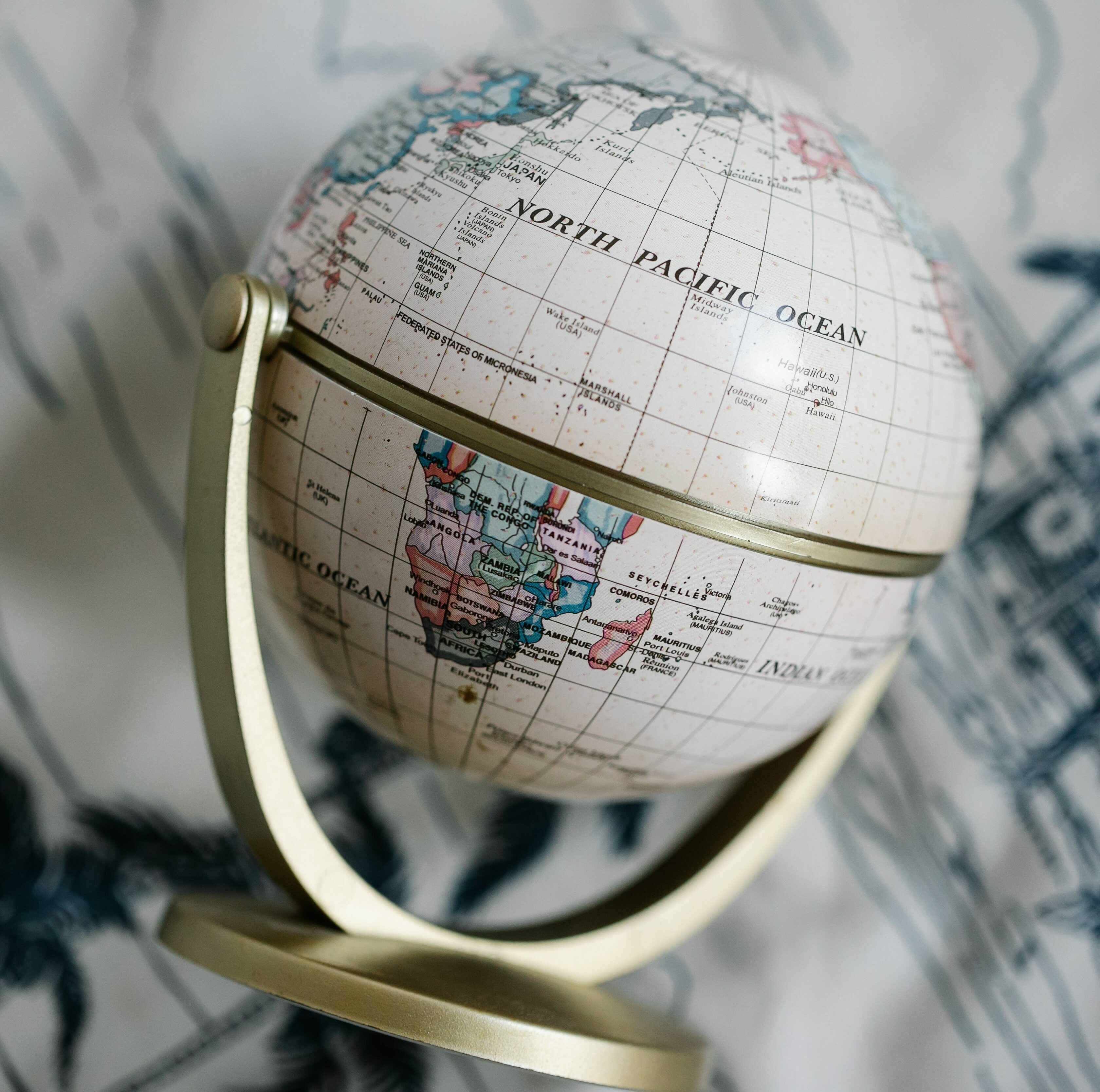
It would be hard to find a novel more literally aligned with a fragrance: Around the World in Eighty Days, one of Jules Verne’s best-known novels, published in 1872 as part of his great “Voyages Extraordinaires” cycle, tells of Phileas Fogg’s wild wager to circle the globe in eighty days, thanks to the new networks of trains and steamships then redrawing the map of the world. It is this same age of great international routes that allowed L.T. Piver to cross paths, along the same trade routes, with the spices that fed the creation of Un Parfum d’Aventure in 1863. Pink pepper and bergamot in the top notes, clove, nutmeg, and cinnamon in the heart: each stage of the fragrance mirrors a stage of the journey, an entire world tour held within a single bottle rather than eighty days.

This same fascination with a dreamed-of Orient runs through Les Orientales, the famous poetry collection Victor Hugo published in 1829, amid the excitement surrounding the Greek War of Independence, which had just revived interest in the Orient across Europe. Hugo himself had never set foot in the Orient: the collection is a pure exercise of imagination, which takes nothing away from its evocative power. It captures that same idealized Orient the 19th century so loved to invent, made of golden palaces and nights that never seem to end, a mood shared directly by Rêve d’Or, imagined in 1889. The sparkling aldehydes of its top notes, its heart of raspberry, rose, and saffron, carry that same quiet exuberance, that generosity that never seeks to justify itself.

Memory and Sensuality

Created in 1885, Héliotrope Blanc owes its existence to a feat of chemistry: finally capturing the scent of a flower that nature refused to yield through classic extraction methods. This idea that a fleeting sensation can bring an entire world rushing back intact resonates directly with In Search of Lost Time, Marcel Proust’s most famous work, whose first volume appeared in 1913 and whose writing would stretch across nearly two decades, across seven volumes. The narrator relives his entire childhood in an instant, from the simple taste of a madeleine dipped in a cup of tea, one of the most discussed scenes in all of French literature. Héliotrope Blanc, with its roundness of almond, tonka bean, and vanilla, seeks that same effect: a memory that resurfaces before you’ve even thought to look for it.

That same ancient sensuality is found in Salammbô, the novel Gustave Flaubert, the world-famous author of Madame Bovary, devoted in 1862 to the opulence and excess of ancient Mediterranean civilization. Flaubert pushed his commitment to accuracy so far as to travel to Tunisia to study the remains of ancient Carthage firsthand, with the same archaeological rigor that Jacques Rouché and the chemist Georges Darzens would later bring, decades on, to the composition of Pompeia in 1907, inspired by the excavations then unearthing the ashes of the buried city. The fragrance shares that same suspended atmosphere: mandarin and peach in the top notes, jasmine and saffron in the heart, amber and patchouli in the base, for a sensuality that seems to ignore the passing of time.

Want to discover all our fragrances?
Our Olfactory Library brings together our seven Eaux de Parfum in a single set.

Discover

Personalized Gift

Gift wrapping available with every order.

Customer Service

Our team is here to assist you: contact us by email.

Free Delivery

With any purchase $over 150

Complimentary Sample

Complimentary fragrance sample with purchases of 65€ or more.